
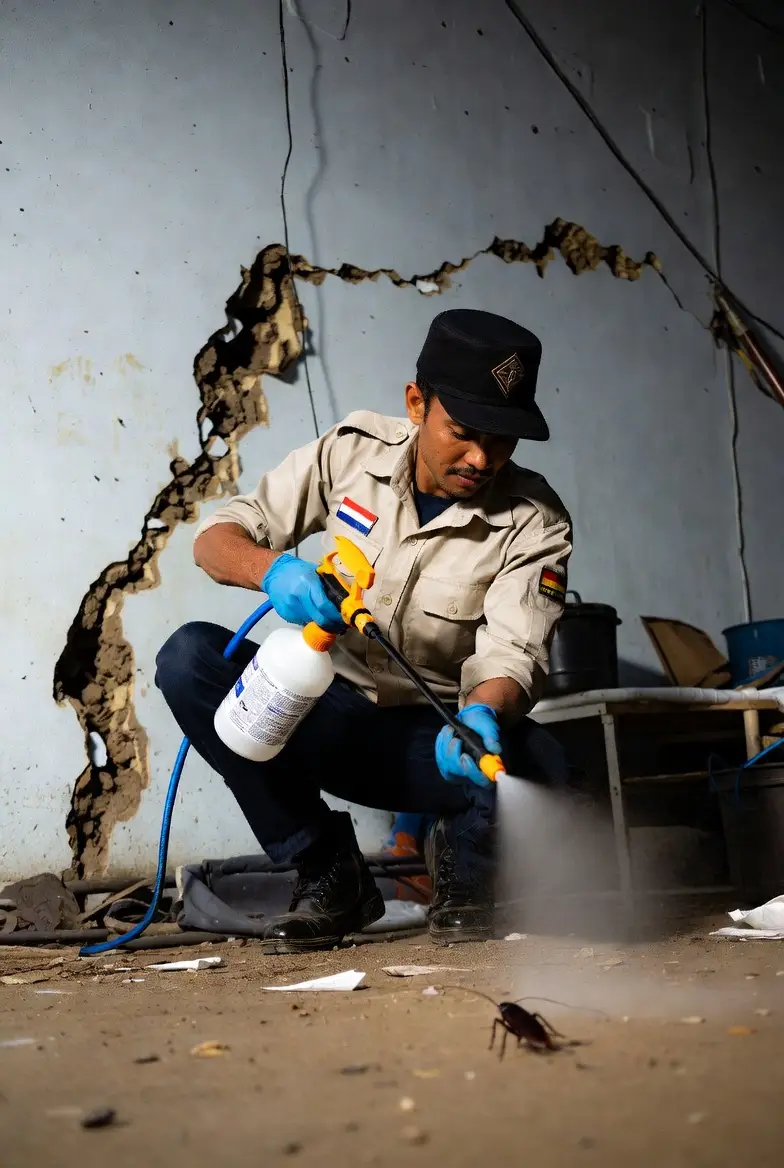
Cockroach Pest Control: What Works, What Doesn’t, and How to Get Control Without Panic
For most indoor infestations—especially German vs American Cockroaches—the most reliable approach is an IPM plan built around monitoring traps + precision baiting + an insect growth regulator (IGR), with targeted crack-and-crevice treatment and moisture/food control.
Why cockroach control is a “system,” not a spray
Roaches don’t thrive because your house is “dirty.” They thrive because they’re good at exploiting small advantages: a drip under a sink, crumbs behind a stove, cardboard clutter near warmth, and tiny cracks that never get cleaned.
Integrated Pest Management (IPM) is built for exactly this kind of pest: use prevention and monitoring first, then apply targeted control methods with the least risk.
This page is the decision guide: what to do now, what actually works, and when it makes sense to bring in a pro.
Fast ID: which roach are you dealing with? (the plan changes)
You don’t need perfect identification. You just need the right category.
Most likely roach Common clues What it usually means
German roach Small; kitchen/bath; seen at night; multiple sightings; nymphs (tiny roaches) Often a breeding infestation that needs bait + IGR + follow-ups
American / large roaches Large; basements, garages, utility rooms; sometimes from drains/outdoors Often tied to entry points/moisture; can be “invaders” but still need targeted control
Smokybrown (regional) Large; humid areas; attics/garages; outdoor association Moisture + exterior harborages often drive sightings
Why this matters:
UF/IFAS German cockroach guidance emphasizes assessment-based management, with baits and IGRs as preferred chemical options rather than routine spraying.
DIY vs Pro: the decision boundary
DIY might be enough if
You’ve seen one or two roaches total (not weekly)
No nymphs, no egg cases, no “hot zone” behind appliances
Roaches in the Kitchen at Night
You can place monitoring traps and do basic sanitation/moisture fixes
Call a pro sooner if
You see roaches weekly or daily, especially small ones
You’re seeing nymphs, droppings, or egg cases
It’s an apartment/condo (re-introduction risk)
You already tried sprays and the problem keeps returning
You’re managing asthma/allergy sensitivity in the home (IPM helps reduce triggers and reduces unnecessary pesticide exposure)
What actually works: the “3 material types” IPM toolkit
A lot of SERP-winning guidance boils roach control down to three tool categories:
- Insecticidal baits
- Insecticidal dusts
- Insect growth regulators (IGRs)
Those tools work best when they’re paired with monitoring + prevention (food/water reduction and exclusion).
Tool What it does Best use Common mistake
Baits (gel/station)
Roaches feed and carry toxicant into harborages German roach control; kitchen/bath hot zones Putting bait in the open, or spraying near bait
IGR Disrupts
development/reproduction over time Long-term collapse of breeding pressure Expecting instant results; skipping follow-ups
Dusts (in voids/crevices)
Residual control in hidden, dry spaces Wall voids, behind cabinets, inaccessible cracks Overapplying or dusting open surfaces
The 7-day plan (calm, practical, and realistic)
Today (30–60 minutes)
Place monitoring traps: behind fridge/stove, under sink, near trash, bathroom vanity. Monitoring is a core IPM practice.
Remove competing food: wipe grease, seal dry goods, don’t leave pet food out overnight.
Fix moisture basics: dry sink basins overnight, repair obvious leaks, avoid leaving wet sponges out.
Next 48 hours
Start precision baiting in cracks/crevices near hot zones (behind appliances, cabinet corners, hinges).
Do not “fog” the house as a first-line step—foggers rarely hit harborages and can complicate baiting strategies. (Most serious IPM guidance emphasizes targeted approaches rather than broad exposure.)
By day 7
Re-check traps: activity should be trending down.
Refresh bait placements if they’ve been consumed or contaminated.
If trap counts are not improving—or you keep seeing nymphs—upgrade to pro-level IPM with follow-ups.
Why roach bait “doesn’t work” (and how to fix it)
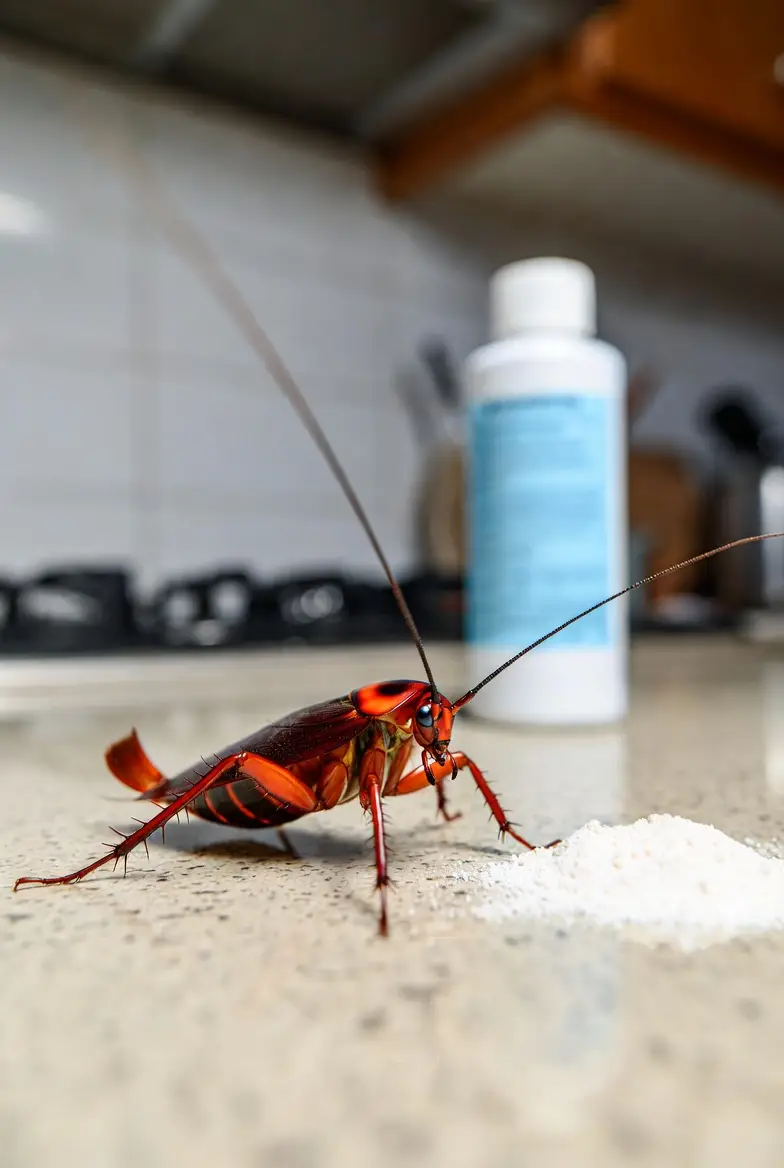
Bait failures are usually human failures, not product failures.
The most common reasons
Competing food (grease behind the stove, crumbs under toaster) makes bait less attractive.
Bait is placed in the wrong spot (open surfaces instead of cracks/void edges).
Sprays are used near bait, disrupting movement patterns and turning the strategy into chaos.
No monitoring (you’re guessing instead of measuring). Monitoring traps are standard in IPM programs.
A clean rule:
traps tell you where; bait works where they travel; IGR collapses what you can’t see.
What a good pest control company should do (so you can judge quality)
A quality roach program looks like an IPM program, not a “spray visit.”
Expect:
Inspection + activity mapping (often with traps)
Baits + IGR emphasis for German roaches, used based on assessment (not calendar-based)
Targeted crack-and-crevice work, and dusting only where appropriate
Clear prep guidance (sanitation/moisture changes)
Follow-up schedule tied to results (trap counts, sightings)
If a company won’t talk about monitoring, bait strategy, or follow-ups, you’re likely paying for temporary suppression.
Health + safety note (without fear)
Roaches can contribute to indoor allergen load and can aggravate asthma in sensitive environments; IPM is often recommended because it emphasizes prevention and reduced pesticide exposure.
If you’re managing asthma/allergies:
prioritize sanitation + moisture control + sealed storage
avoid overusing aerosols/foggers
prefer an IPM-style approach with precision placement and monitoring
How long does cockroach pest control take?
Typical expectations when the plan is done correctly:
1–2 weeks:
sightings should drop and trap counts improve
3–6 weeks:
breeding pressure reduces significantly when IGR + baiting is consistent
1–3 months:
“quiet house” is realistic for many single-family homes—if prevention sticks
Apartments can take longer because re-introduction is common.
Prevention: how to keep them from coming back
Prevention isn’t perfection. It’s removing the “easy wins” roaches rely on.
High-impact prevention list
Seal and store food; reduce grease buildup near cooking areas
Fix leaks and damp zones (water is often the deciding factor)
Reduce cardboard/clutter in warm, hidden spaces
Seal obvious gaps around plumbing penetrations
Keep a couple of traps down as an early warning system
Limitations / Drawbacks
Heavy infestations may require multiple rounds and behavior changes (sanitation + moisture control) to prevent rebound.
In multi-unit buildings, you can improve your unit but still get re-introductions.
Roach control is rarely “one and done”—IPM expects monitoring and targeted adjustments.
Bottom line
Cockroach pest control works when you treat it like a system: identify the roach type → monitor → precision bait → add IGR to break the cycle → use dusts only where appropriate → fix food/moisture → follow up. That’s the calm approach that aligns with IPM principles and the most consistent real-world outcomes.