
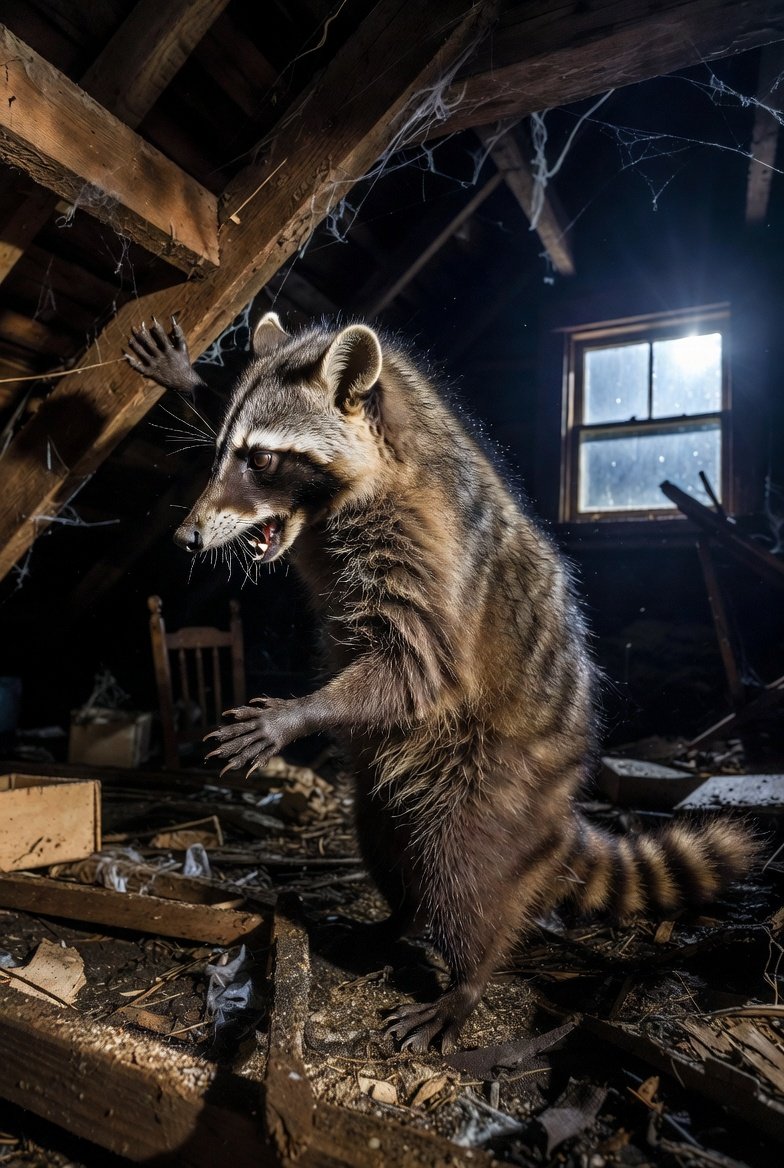
Animal in Attic Scratching at Night: What the Noise Usually Means
Hearing scratching in the attic at night is difficult to ignore.
It’s rarely loud enough to feel urgent — but persistent enough to raise questions.
The key isn’t panic.
It’s a pattern.
Most attic scratching falls into one of two categories:
- Normal structural movement
• Wildlife or rodent activity
Understanding which one you’re dealing with determines whether this is minor or something that requires professional attention.
What To Do Tonight (Before Assuming the Worst)
If the scratching just started, take five calm steps:
- Confirm timing — Is it strictly after dark? Or random during the day?
• Listen for movement pattern — Light and fast? Heavy and rolling?
• Do not enter the attic at night — Low visibility increases risk.
• Inspect the exterior in daylight — Look for small gaps or roofline entry points.
• Monitor for two nights — Repetition matters more than a single event.
Most serious attic wildlife problems show consistent nighttime activity.
If it repeats, move to identification.
First: Is It Definitely an Animal?
Before assuming wildlife, rule out common non-animal causes.
Sounds That Often Mimic Animal Activity
- HVAC duct expansion and contraction
• Roof decking shifting as temperatures change
• Tree branches brushing the roof
• Plumbing lines adjusting
• Loose siding in wind
These noises are usually:
- Irregular
• Not tied strictly to nighttime
• Lacking directional movement
Animal scratching tends to have rhythm — short bursts, movement across space, then pauses.
If you’re noticing multiple indicators beyond sound, reviewing signs of pest infestation can help confirm the likelihood.
Sound + Timing Likelihood Matrix
Sound characteristics and timing together provide strong clues.
Sound Pattern | Timing | Most Likely Animal |
Light scratch → pause → scratch | Late night | Mice |
Fast scamper along ceiling | Late night | Rats |
Heavy thud / rolling | Night | Raccoon |
Rapid scampering at dawn | Early morning | Squirrel |
Light flutter near dusk | Dusk / early night | Bats |
Timing is often more important than volume.
Night-only activity strongly suggests rodents or raccoons.
Daytime noise leans toward squirrels.
Most Common Animals That Scratch in Attics
Mice
Small, repetitive scratching.
Often concentrated near insulation or wiring.
Rats
Heavier than mice.
Often accompanied by gnawing.
Raccoons
Distinct thuds and slow movement.
May remain localized to one section.
Squirrels
Active at dawn or daytime.
Quick, darting movement.
Bats
Light fluttering or faint scratching near dusk.
If rodent activity is likely, our rodent removal guide outlines removal and exclusion steps in detail.
When Attic Scratching Becomes a Real Risk
Not every attic animal creates immediate danger.
Risk increases when:
- Chewing sounds occur near wiring
• Droppings are visible
• Strong odors develop
• Insulation appears displaced
• Noise repeats nightly
Rodents can chew electrical wiring, increasing fire risk.
Wildlife nesting may damage insulation and structural components.
Droppings can create sanitation concerns over time.
Risk grows with duration.
Decision Threshold: Monitor or Act?
Situation | Monitor | Call Professional |
Single-night noise | ✔ | |
Random light scratching | ✔ | |
Noise repeating nightly | ✔ | |
Chewing sounds | ✔ | |
Droppings found | ✔ | |
Visible entry points | ✔ | |
Strong odor present | ✔ |
Frequency is often the deciding factor.
If the noise continues for more than a few nights, evaluation is usually justified.
Important Safety Note Before Entering the Attic
If you inspect during daylight:
- Wear gloves and a mask
• Avoid direct contact with droppings
• Do not vacuum dry waste
• Avoid using poison bait in attics (dead animals can create odor issues)
Identification should come before intervention.
Bat-Specific Caution
If the sound resembles fluttering near dusk and small droppings are visible below roofline gaps, bats may be involved.
Do not seal entry points immediately.
Bat exclusion requires proper timing to prevent trapping animals inside.
Professional guidance is typically recommended.
How Animals Get Into the Attic
Common access points include:
- Soffit gaps
• Roof vents
• Ridge caps
• Damaged flashing
• Unsealed utility penetrations
Many of these openings are small and difficult to see from ground level.
If entry points are suspected, our attic pest control guide explains inspection and exclusion strategies.
What Professional Inspection Involves
If activity continues, a professional evaluation typically includes:
- Exterior inspection
• Entry-point identification
• Interior attic assessment
• Species confirmation
• Exclusion planning
Removal is only phase one.
Sealing entry points is what prevents recurrence.
For broader wildlife concerns, our wildlife removal overview explains integrated approaches.
How Much Does It Cost to Fix an Animal in the Attic?
Costs vary by species and access difficulty.
Typical Ranges
- Rodent removal: $200 – $600
• Wildlife (raccoon/squirrel): $400 – $1,500
• Exclusion/sealing repairs: Additional depending on structural damage
The largest cost driver is usually exclusion work, not the initial inspection.
Without sealing entry points, recurrence risk remains.
For a broader breakdown, see pest control cost estimates.
What Happens If You Wait?
Small rodent problems can expand quickly.
Wildlife nesting may increase structural damage.
Insulation displacement reduces energy efficiency.
Droppings accumulate over time.
Attic wildlife rarely resolves on its own.
Earlier intervention is typically simpler.
Prevention Steps That Reduce Recurrence
After removal:
- Seal all confirmed entry points
• Install vent screens
• Trim branches away from roofline
• Inspect roof annually
• Monitor attic insulation
Consistency prevents repeat entry.
The Bottom Line
Scratching in the attic at night isn’t random.
Sound pattern, timing, and repetition tell the story.
Occasional noise may be structural.
Repeated nightly movement usually isn’t.
Identifying the source early protects both your home and your peace of mind.
Handled correctly, most attic wildlife situations resolve predictably.