
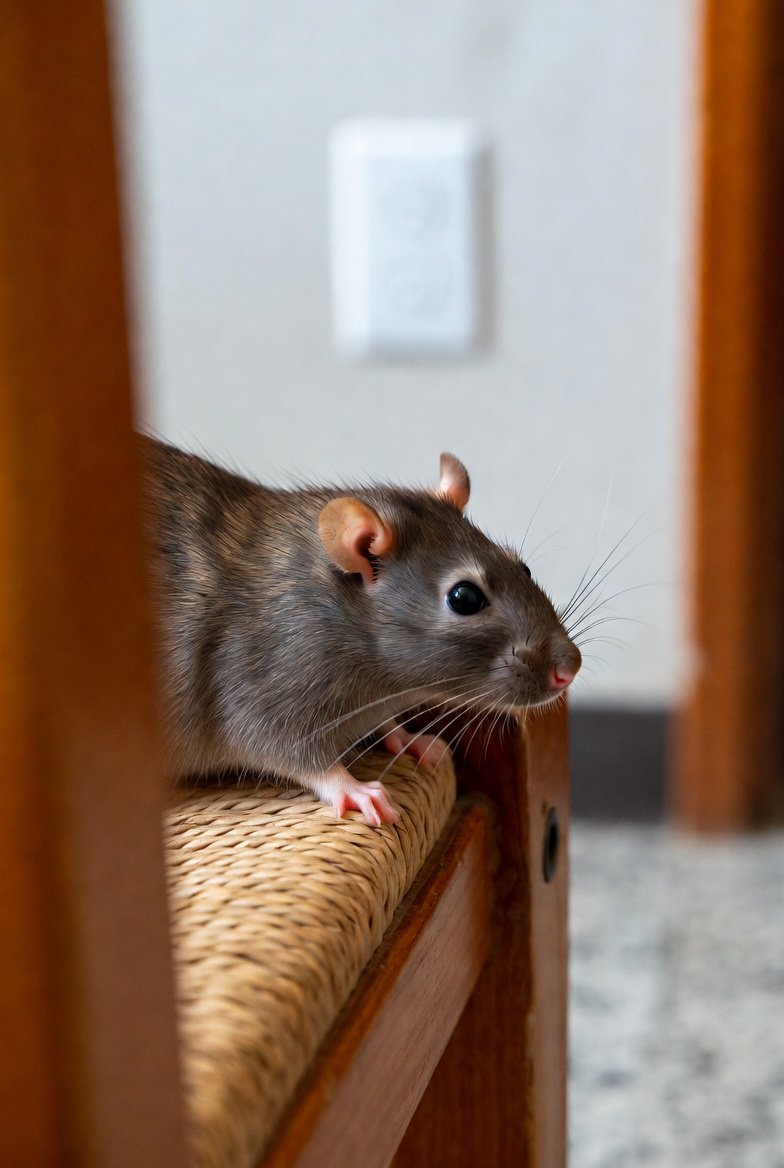
Rat in My House: Immediate Containment, Nest Risk, and What to Do Next
A rat in your house isn’t just startling.
It’s a signal.
Not necessarily a full infestation — but a breach that can escalate quickly if ignored.
One sighting can mean:
- A single intruder
- Structural access failure
- Or an early nest forming inside walls
The difference determines urgency.
Containment comes first.
Diagnosis comes second.
Sealing comes last.
Order controls spread.
Immediate 60-Minute Containment Protocol
If you saw a rat in your living room, kitchen, or hallway:
1️⃣ Close doors to isolate the room.
2️⃣ Block door gaps with towels.
3️⃣ Remove pets immediately.
4️⃣ Secure exposed food and trash.
5️⃣ Do not chase it.
Chasing forces rats deeper into wall cavities or adjacent rooms.
Containment prevents interior migration.
24-Hour Containment Timeline
Hour 0–1
Isolate room and secure food.
Hour 1–6
Deploy traps along wall edges and behind appliances.
Night 1
Do not disturb setup. Monitor activity.
Morning Day 2
Check traps. Inspect for droppings clusters.
Day 2–3
Inspect exterior entry points and shared walls.
If activity continues after 72 hours, reassess nest probability.
Quick Risk Snapshot
Indicator | Lower Risk | Elevated Risk |
Sightings | Single | Repeated |
Timing | Night only | Daytime |
Location | Garage/basement | Kitchen/living space |
Droppings | None/minimal | Clustered |
Odor | None | Ammonia present |
Daytime appearance inside a living area increases severity tier.
Nest vs Transit — Technical Confirmation
Emergency readers often want deeper confirmation.
Here’s the structural distinction:
Indicator | Transit Movement | Nest Inside Structure |
Noise pattern | Moves room to room | Same wall zone nightly |
Droppings | Scattered | Tight cluster near walls |
Odor | None | Localized ammonia |
Duration | Short-term | Persists >7 days |
Daytime activity | Rare | More likely |
If scratching continues behind drywall after sighting, wall nesting becomes more probable.
For species behavior reference:
Nest Probability Score (0–10)
Add 2 points for each:
+2 Daytime sighting
+2 Repeated sightings
+2 Droppings clustered within 3 ft
+2 Night scratching persists
+2 Odor present
0–3 → Likely single intrusion
4–6 → Possible interior nesting
7–10 → Nest highly likely
Avoid opening drywall unless score ≥6 and activity persists.
Reproduction Acceleration (Why Delay Matters)
- Gestation: ~21–23 days
- Litter size: 6–12 pups
- Maturity: ~5 weeks
One unnoticed breeding pair can escalate rapidly within 30 days.
This is timeline math — not panic framing.
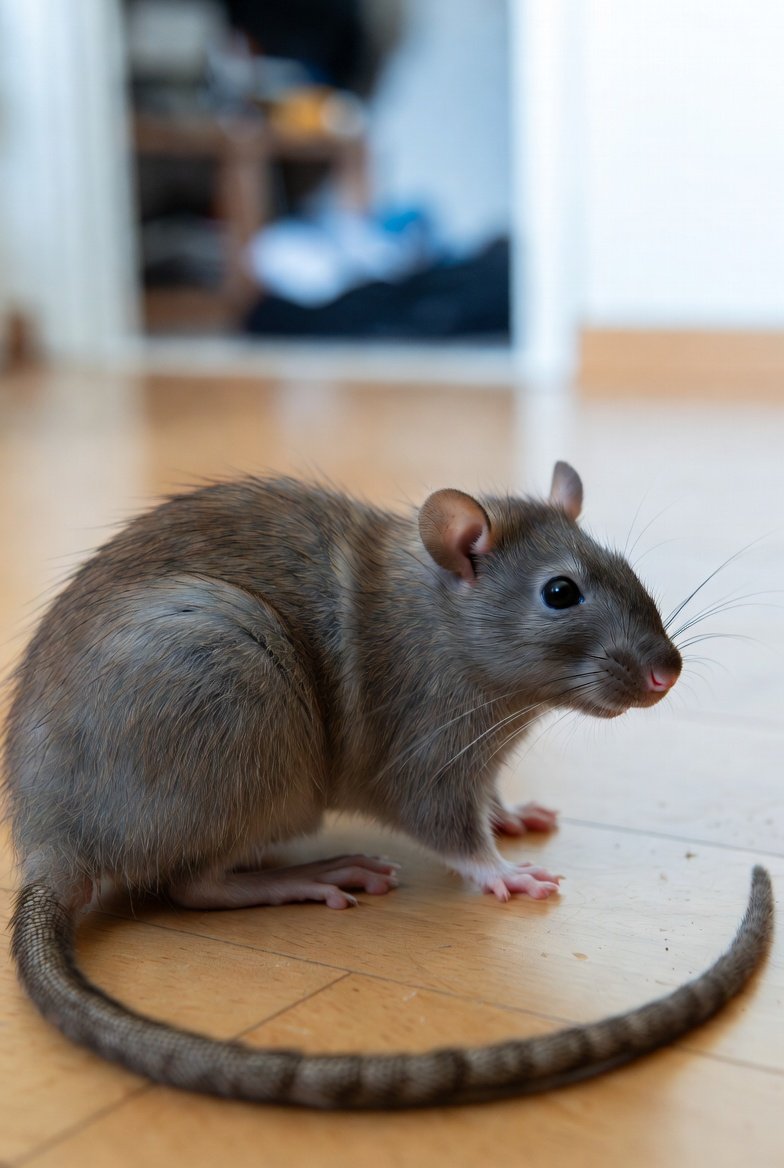
Room-Specific Containment (Living Room & Kitchen)
Rat in Living Room
- Inspect behind furniture
- Check entertainment center wiring
- Block fireplace gaps
- Inspect floor vents
Kitchen Containment
- Remove pet food overnight
- Seal pantry goods
- Clean grease areas
- Inspect behind refrigerator/stove
Interior presence often indicates structural crossover.
If scratching overlaps ceiling:
Animal in Attic Scratching at Night
Trap Deployment Strategy (Interior Emergency)
Rats hug walls.
Place traps:
- Along wall edges
• Behind appliances
• In dark corners
• Near baseboards
Never center-room placement.
Pre-Bait Protocol
If avoided:
- Leave bait unset 24 hours
- Then activate trap
Avoid rodenticide inside living spaces.
Decomposition inside walls leads to persistent odor and contamination.
If Traps Fail (Adjustment Protocol)
After 3 nights without capture:
- Relocate closer to edge
• Change bait type
• Increase trap density
• Reduce human scent
If bait disappears without capture:
• Increase trigger sensitivity
If untouched:
• Entry likely from attic or crawlspace
For structural removal and emergency rodent removal:
Rodent Removal (Attic & Structural)
Interior Hygiene & Exposure Clarification
Seeing a rat does not automatically mean disease exposure.
Risk increases when droppings are disturbed and airborne.
After sighting:
- Wear gloves
• Disinfect surfaces
• Do not dry sweep droppings
• Discard food contacted
Containment reduces risk significantly.
Entry Point Probability Ranking
Entry Point | Likelihood | Notes |
Garage-to-house wall | High | Common breach zone |
Foundation gap | High | Exterior crack access |
Utility penetration | High | Pipe/electrical entry |
Roofline gap | Moderate | Attic crossover |
Dryer vent | Moderate | Flap damage common |
Interior capture without exterior sealing leads to recurrence.
Contamination Risk Levels
Level | Condition | Action |
Level 1 | Single sighting | Contain + trap |
Level 2 | Repeated sightings | Trap + inspect entry |
Level 3 | Droppings + odor | Remove + exclude |
Level 4 | Multi-room activity | Professional removal |
Break-Even Escalation Logic
DIY:
$50–$200
Professional emergency rodent removal:
$400–$1,200
Escalate when:
- Nest Score ≥7
• More than 2–3 captures weekly
• Daytime sightings continue
• Multiple rooms affected
When reproduction outpaces capture, professional exclusion becomes more cost-effective.
Limitations
Applies to:
- Residential wood-frame homes
• Early to moderate interior sightings
Does not replace:
- Severe structural infestation
• Electrical hazard inspection
• Major insulation remediation
If contamination extends upward:
Rat Poop in Attic
Decision Matrix
Single sighting → Contain + trap
Repeated sightings → Trap + inspect structure
Daytime appearance → Removal + exclusion
Multi-room presence → Professional structural removal
Bottom Line
A rat in your house is a containment problem first.
Isolate.
Trap properly.
Seal after removal.
Escalate when nest probability demands it.
Structure beats panic.