
What Are Pest Control Services?
Most people don’t wake up excited to learn the definition of “pest control services.” They get pulled into it.
A faint scratching above the bedroom. Ants in the kitchen that keep coming back. A roach sighting that makes you wonder what you didn’t see. A suspicious pile of droppings in the attic insulation. And suddenly you’re trying to answer two questions at the same time:
What is this?
What do I do next—without making it worse?
That’s where pest control services fit in. At their best, they’re not “spray and go.” They’re a practical system to identify the problem, reduce the conditions that attract pests, stop entry, and control what’s already inside—safely and effectively.
So, what is pest control services?
Pest control services are professional services that help prevent, reduce, and manage pests in and around a home or building using a mix of methods—inspection, monitoring, sanitation/prevention, exclusion (sealing entry points), and targeted control when needed.
A useful way to think about it is Integrated Pest Management (IPM). IPM is a science-based, common-sense approach that emphasizes prevention first, and uses treatments when monitoring and identification show they’re necessary.
In plain English: don’t attract pests, keep them out, and if they’re already in, remove them with the safest method that works.
What Pest Control Services Usually Include
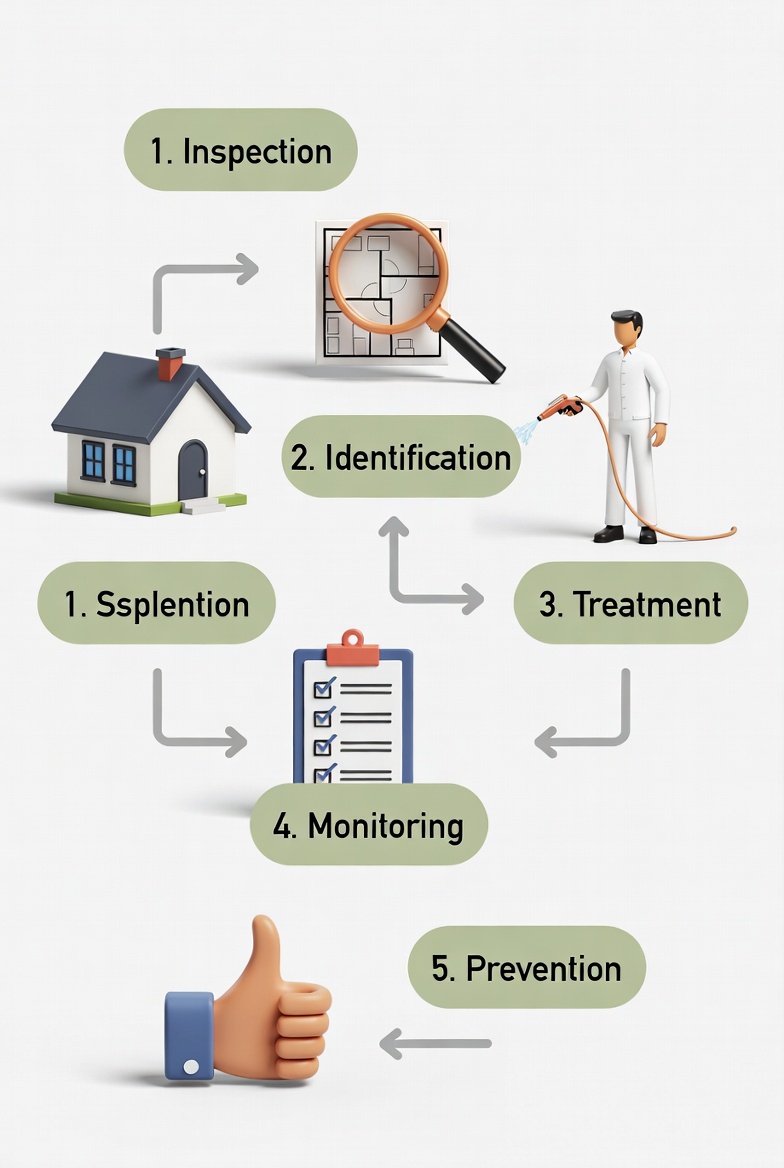
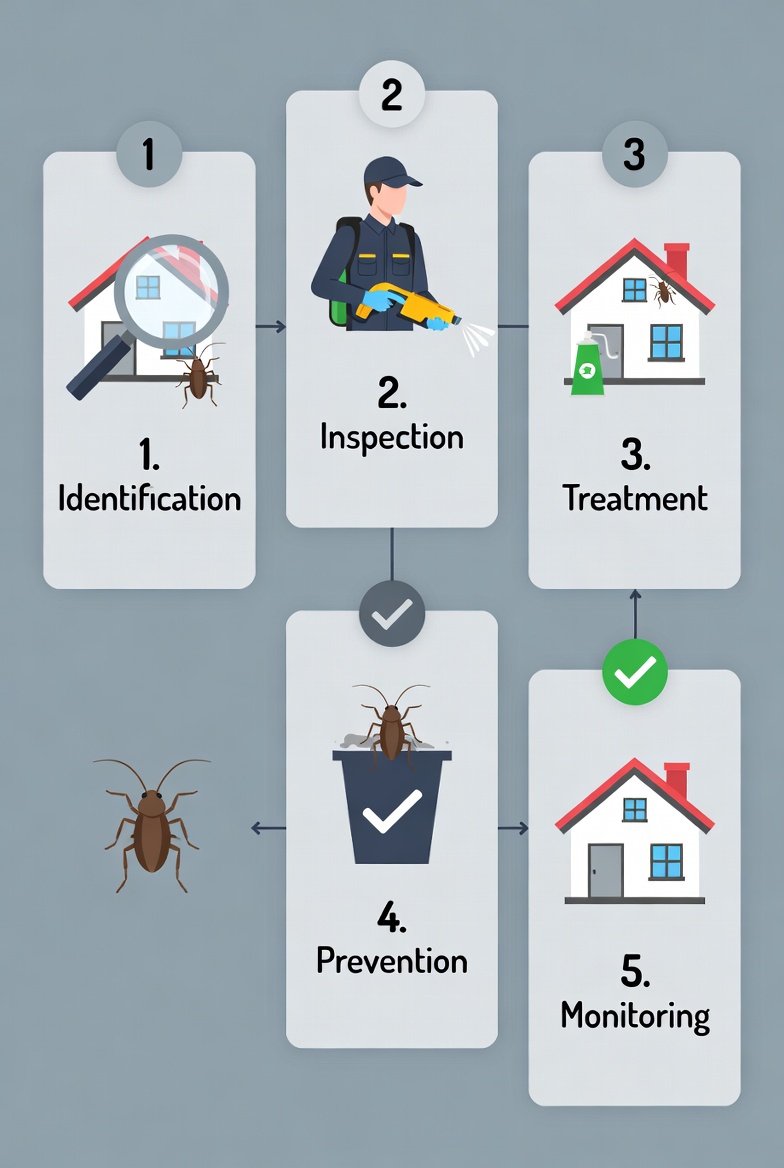
Most reputable pest control services include some combination of the five pieces below. If a company skips the first two and goes straight to treatment, that’s usually a weaker plan.
1) Inspection
Inspection is where the work starts. A real inspection typically looks at:
Entry points (gaps under doors, vents, soffits, rooflines, plumbing penetrations)
Evidence (droppings, gnaw marks, rub trails, frass, shed skins, live activity)
Moisture (leaks, condensation, standing water, clogged gutters)
Food sources (trash habits, pantry storage, pet food routines)
Risk zones (kitchen, attic, crawl space/basement, garage)
This matters because pest control is part home maintenance. You’re not just “killing bugs”—you’re fixing the conditions that allow them to thrive.
2) Identification (and rule-out)
Identification is where homeowners either save money… or waste it.
Good pest control helps you answer:
- What is it?
- What could it be instead?
- What would prove it either way?
That “rule-out” step is huge in this niche because many problems look similar:
- Termites vs flying ants
- Mouse droppings vs roach droppings
- Squirrels vs rats in the attic
- Carpenter ants vs regular ants
- German roaches vs American roaches
If you treat the wrong pest, you don’t just lose time—you often push the real problem deeper (especially with roaches and rodents).
3) Prevention and sanitation guidance
The EPA’s homeowner guidance is very straightforward: try prevention first by removing sources of food, water, and shelter—store food properly, fix leaks, and reduce what attracts pests.
This part commonly includes:
Food storage upgrades (sealed containers, clean-up routines)
Trash control (tight lids, cleaning, regular removal)
Moisture fixes (plumbing leaks, humidity control, drainage issues)
Yard and exterior adjustments (trim vegetation, remove debris piles)
4) Exclusion (sealing entry points)
Exclusion is the “keep them out” part—and it’s often the most important long-term lever for rodents and attic wildlife.
Exclusion work can involve:
- Sealing cracks and gaps near doors/windows
- Screening vents and attic openings
- Sealing utility penetrations
- Installing door sweeps
Repairing damaged soffits or fascia gaps
NPIC (Oregon State University’s National Pesticide Information Center) highlights “close up entrances and exits” as a key home IPM step—finding entry points is often the hard part.
Important reality: some companies include exclusion in a package, others only recommend it. Always ask what’s included.
5) Targeted control (treatment)
Treatment is what people imagine first—sprays, baits, traps, dusts—but in modern IPM-style thinking, it’s ideally targeted and justified by inspection and monitoring.
Control may include:
- Gel baits (ants/roaches)
- Crack-and-crevice treatment (not “fog everything”)
- Insect growth regulators (in certain cases)
- Trapping programs (rodents)
Spot treatments based on activity zones
A Quick “Service Map” of Pest Control
Different pests often need different service types. Here’s the clean map:
General pest control: ants, spiders, occasional invaders, perimeter prevention
Roach control: species-specific (German roaches usually need a structured plan)
Rodent control: inspection → trapping/baiting strategy → exclusion → follow-ups
Attic wildlife control: identify species → safe removal approach → exclusion → cleanup guidance
Termite services: specialized inspection + specific treatment options + documentation/warranty options
This page is your hub. From here, the goal is to route you to the right next page based on your situation.
DIY vs Pro: Decision Boundaries (No Guessing)
DIY can work. But DIY works best when the problem is small, clearly identified, and not tied to hidden nesting or structural risk.
DIY is usually reasonable when
You can clearly identify the pest (minor ants, occasional spiders)
Activity is limited to one area
You can remove attractants and block easy entry points
No contamination cleanup is involved
You haven’t already tried three things and failed
Call a pro when
You can’t identify the pest with confidence
You see recurring activity after DIY attempts
There are signs of rodents in walls/attic (noises, droppings, odor, insulation disruption)
There are potential termite signs (swarmers, mud tubes, damaged wood)
You suspect German roaches (fast reproduction + kitchen/bath harborages)
The problem is inside wall voids, ceilings, attics, or crawl spaces
You’re dealing with stinging insects in a wall/attic (higher risk, harder access)
Here’s the calm truth: sometimes the biggest cost isn’t money—it’s the weeks of uncertainty while the problem grows.
Table: DIY vs Pro (Fast Decision)
Situation DIY First? Why Best Next Step
A few ants near a window or sink ✅ Often a trail/food attractant issue Clean + seal + bait strategically
One spider sighting ✅ Many are occasional invaders Reduce entry points + monitor
Roaches seen in daytime (especially small) ⚠️ Could indicate higher activity Identify species; consider pro plan
Scratching/noises in attic at night ❌ Likely nesting/entry points Move to attic wildlife/rodent decision pages
Droppings/urine smell in attic/garage ❌ Cleanup + source control required Route to rodent signs + removal plan
Termite swarmers or suspected wood damage ❌ High stakes + specialized inspection Route to termite inspection/cost pages
What Happens If You Ignore It (Typical Timeline)
Not fear—just patterns.
Within 24 hours: you may see more signs because the underlying attractant/entry remains.
Within 7 days: pests settle into routes and harborages; DIY gets harder.
Within 30 days: secondary damage risk goes up—contamination (rodents), insulation issues (attic pests), and for termites, potentially serious structural implications.
One IPM concept that helps here is the idea of action thresholds—not every pest sighting needs a major response, but some signs cross a line where action becomes the smarter move.
What a Professional Pest Control Visit Should Look Like
You’re not paying for “a chemical.” You’re paying for a process.
A competent visit usually includes:
Questions about what you’ve seen and where
Inspection inside + exterior
Clear identification (or a plan to confirm)
Explanation of attractants and entry points
A treatment approach tied to the pest and risk level
Prevention and exclusion guidance
Follow-up schedule if the pest requires it (rodents/roaches/termites often do)
For choosing a company, EPA and NPIC both emphasize competence and value, not just price, and recommend evaluating qualifications and what the company will actually do.
Safety Note: Rodent Droppings Cleanup (Do This the Safe Way)
If you’re dealing with rodent cleanup or urine, avoid dry sweeping or vacuuming before disinfecting—this can stir up particles you don’t want in the air.
CDC guidance is clear: wear gloves, spray droppings/urine with a bleach solution or EPA-registered disinfectant until very wet, let it soak, then wipe up and dispose properly.
If contamination is widespread (especially in attic insulation), that’s a strong “call a pro” boundary.
What Pest Control Services Do Not Always Include
This is where expectations get messy.
Depending on the provider, these may be extra:
Full exclusion/sealing work (sometimes an add-on or separate quote)
Insulation removal/replacement after contamination
Repairs to soffits, fascia, roofline gaps
Wildlife cleanup and deodorizing
Termite treatment warranties/bonds (varies)
A smart move is to ask for clarity up front: “Is exclusion included, or is it recommendations only?” That one question prevents most frustration.
How to Choose the Right Pest Control Service (Simple Checklist)
Use this as a quick filter.
Green flags
They start with inspection + identification
They explain entry points and attractants
They recommend prevention and exclusion steps
They give a clear plan (including follow-ups when needed)
They are willing to say, “This needs a specialist,” if it does
Ask these 6 questions
What pest do you think it is—and what are the top 2 look-alikes?
- Where is it likely entering from?
- What changes should I make to reduce food/water/shelter?
- Is exclusion work included, and if not, what do you recommend first?
- How many follow-ups are typical for this pest?
- What should I expect to see in 7–10 days if it’s working?
You’re not being “extra.” You’re making sure the plan matches the problem.
FAQ: Pest Control Questions (Quick Answers)
They’re professional services that inspect, identify, prevent, exclude, and control pests using the safest method that works—often following IPM principles.
Is pest control just spraying chemicals?
No. Prevention, exclusion, and targeted control are the foundation of modern pest management.
How often do people need pest control?
It depends on pest pressure and the property. Some use quarterly prevention. Rodents, roaches, and termite concerns usually need a more structured plan with follow-ups.
What’s the difference between pest control and extermination?
“Extermination” implies wiping pests out completely. “Pest control” is ongoing management—reduce pests to tolerable levels and prevent return (the IPM mindset).
Do pest control services include sealing entry points?
Sometimes. Many companies identify entry points and recommend exclusion, but sealing may be a separate service. Always confirm what’s included.