

Rats in Attic: What It Means and What to Do Next
A lot of attic rat problems start the same way: a sound you can’t explain.
It might be quick scratching after midnight, little skittering runs above the ceiling, or a thump that makes you think, “Is there an animal in my attic?” Then you notice something else—maybe a few droppings near the attic hatch, a sharp smell you didn’t have before, or insulation that looks disturbed.
Here’s the calm truth: rats in an attic are serious, but very fixable—as long as you do things in the right order. This issue is part of larger pest control services that focus on inspection, removal, and exclusion. This page is designed to help you confirm it, avoid the mistakes that create bigger problems, and choose the smartest next move (DIY vs pro) based on clear decision boundaries.
How to Confirm Rats in the Attic (Not Just “An Animal”)
Rats leave a pattern. You don’t need to see one to be fairly sure.
Strong signs it’s rats
Scratching or scurrying at night (rats are most active while you’re asleep)
Droppings along beams, corners, or travel paths (small, dark pellets)
Gnaw marks on wood, plastic, or stored items (rats chew constantly)
Rub/grease marks near openings or along repeated routes
A sharp urine/ammonia odor that lingers in warm weather
Table: Rats vs common attic “look-alikes”
Clue Rats Squirrels Raccoons
Noise timing Mostly night Mostly day Mostly night
Droppings Small pellets, scattered on paths Larger, fewer piles Larger, blunt, often in latrine-like spots
Chewing Heavy (wood, plastic, wires) Moderate Less common
Entry openings Small gaps, vents, edges Roofline gaps Larger roof/soffit damage
Smell Urine/musk Mild Strong, trash-like
If you only heard one noise once, it’s okay to monitor briefly. If you’re getting repeated night activity plus droppings or smell, treat it as a real problem.
Why Rats Choose Attics (And Why They Don’t Leave on Their Own)
Attics are ideal rat habitat:
- Warm, dry, protected
- Lots of nesting material (insulation)
- Low human traffic
- Easy access to wall voids
Once established, rats build routines. They don’t “visit.” They nest, travel the same paths, and keep returning unless entry is blocked.
A key thing many homeowners underestimate: rats can fit through very small gaps. Some rodent IPM guidance notes rats can enter through about a 1/2-inch gap.
That’s why “I sealed the big hole” often doesn’t end the problem—because the real entry point was a smaller gap you never noticed.
What to Do First (The 24-Hour Plan)
Your first day should be about smart control, not chaos.
1) Don’t use poison in the attic
This is the #1 move that turns a manageable problem into a nightmare. Poisoned rats may die inside walls or insulation, leaving odor, flies, and contamination you can’t access easily.
2) Don’t seal the holes yet
Sealing entry points before removal can trap rats inside—pushing them deeper into wall voids and sometimes into living spaces.
3) Confirm the “activity zone”
If it’s safe to do so:
Look for droppings near edges, beams, and corners
Note where insulation is compressed or tunneled
Identify likely entry points (vents, soffits, roofline corners)
If you can’t safely access the attic, skip this and move to professional inspection.
DIY vs Pro: The Decision Boundary That Actually Works
You can DIY the removal part sometimes. Most DIY fails because people skip the part that matters most:
Exclusion (sealing entry points) + sanitation + follow-up.
DIY is reasonable when
Activity seems light (early signs, not nightly chaos)
You can access the attic safely
You’re comfortable placing and checking traps daily
You’re ready to seal entry points after activity stops
Call a pro when
Activity is frequent/loud or you see widespread droppings
The odor is strong (suggests ongoing contamination)
You suspect multiple entry points
You’ve tried DIY for 7–10 days and it’s still active
You see chewing near wires or critical areas
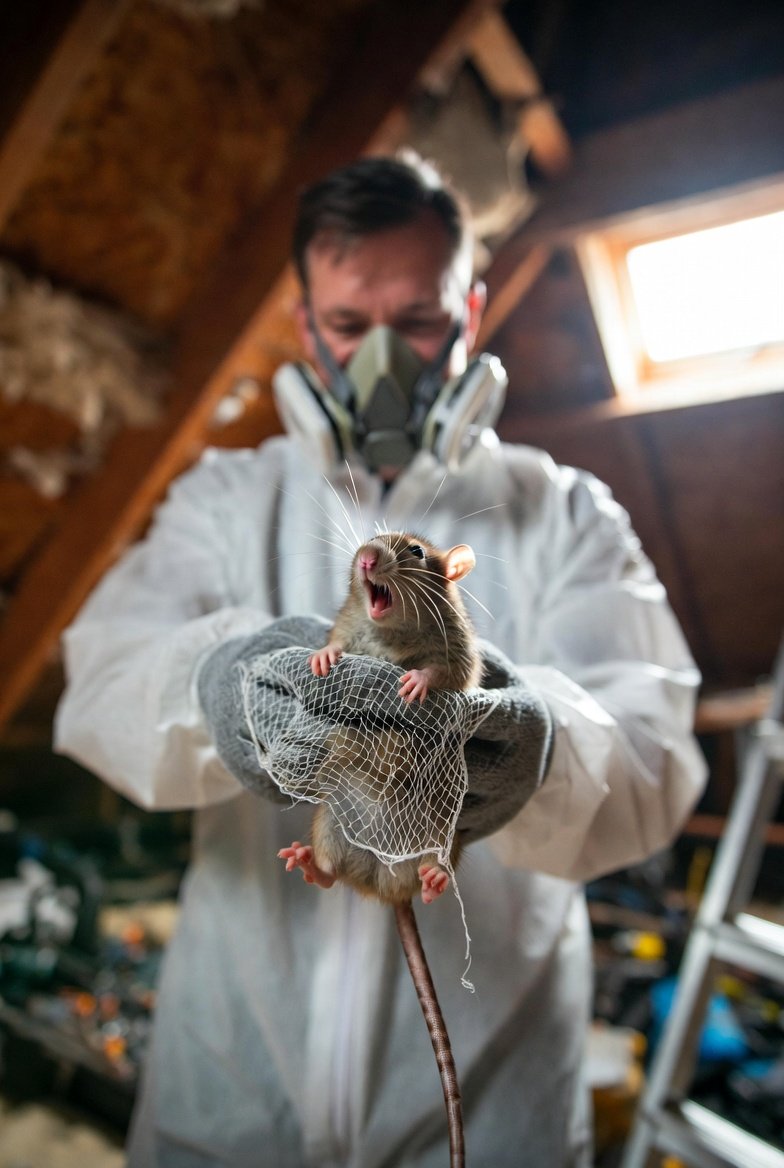
You want exclusion done correctly the first time
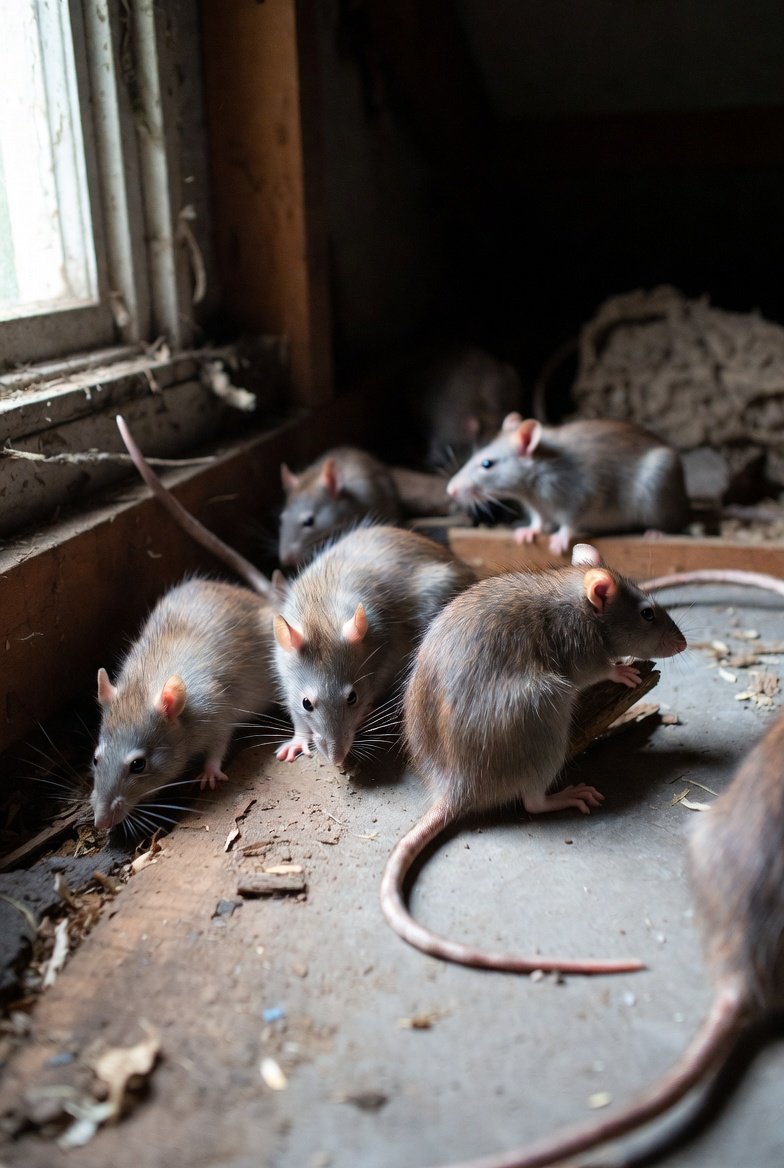
Table: DIY vs Pro for Rats in the Attic
Category DIY Professional
Correct ID You’re guessing Confirmed inspection
Removal Traps you manage Structured trapping + monitoring
Finding entry points Often incomplete Full exterior/attic inspection
Exclusion quality Mixed Usually the main value
Cleanup guidance Limited Often included or quoted
Long-term success Depends on sealing Higher when exclusion is done right
If you only remove rats but leave the home “open,” you usually get a repeat infestation—sometimes within weeks.
Step-by-Step DIY Plan (If You’re Going to DIY)
This is the safest “DIY-first” approach for light-to-moderate situations.
Step 1: Use traps (not poison)
Use snap traps in protected areas (so pets/kids don’t access them). Place along travel routes:
Near beams and edges (rats prefer edges)
Near droppings
Near suspected entry points
Step 2: Set a short evaluation window
Give DIY 7–10 days with daily checks:
If activity is clearly dropping → continue and prepare for exclusion
If activity stays the same → you likely have multiple entry points or a larger colony → call a pro
Step 3: After activity stops, move to exclusion
This is where you win. IPM guidance emphasizes sealing entry points as prevention.
Exclusion Checklist: The “Keep Them Out” Work That Matters Most
Here’s what a good pro will look for—and what you can check too:
- Common attic rat entry points
- Roofline/fascia corners
- Damaged soffits
- Attic vents (loose screens)
Pipe penetrations and utility lines
Gaps where different building materials meet
Table: Quick exclusion checklist
Area What to check Fix goal
Roofline / fascia Gaps, rot, corners Close all gaps
Soffits Loose panels, holes Repair + seal
Vents Screen missing/damaged Rodent control service
Utility penetrations Pipe/wire gaps Seal tightly (rodent-resistant materials)
Doors/garage access Bottom gaps Door sweeps / seals
Remember: rats can squeeze through small gaps—some guidance notes around 1/2 inch can be enough.
Cleanup & Safety (Do This the Right Way)
If you find droppings rat droppings in attic or nesting material, don’t dry sweep or vacuum it.
CDC guidance recommends:
- Wear gloves
- Spray droppings/urine with disinfectant until soaked
- Let it sit (CDC notes about 5 minutes or per label)
Wipe up with paper towels and dispose properly
Disinfect the area again
This “wet cleaning” approach is repeated by public health agencies because it reduces risk from stirring contaminated dust.
If contamination is extensive (especially soaked insulation), a pro cleanup/insulation replacement quote may be warranted.
Damage Risk: Why Attic Rats Can Get Expensive
Two big reasons rat infestations escalate cost:
1) Contaminated insulation
Once insulation is heavily contaminated, the cost often becomes “remove and replace,” not “spot clean.”
2) Chewed wiring and hidden hazards
Rats chew to keep teeth worn down. If chewing hits electrical wiring, it can create serious risk. Many pest resources warn that chewed wire insulation can expose conductors and increase fire hazard.
Even if you don’t see wiring damage, attic infestations should be addressed quickly.
How Long It Takes (Realistic Timeline)
Every situation is different, but here’s a practical expectation:
Table: What happens if you act now vs delay
Time window If you act now If you delay
24 hours Confirm signs, begin trapping/inspection More activity, more contamination
7 days Activity often drops with proper trapping Established routes and nesting expand
30 days Exclusion prevents re-entry; cleanup contained Higher odor risk, insulation damage grows
Cost: What Rat Removal in an Attic Can Run (Typical Ranges)
Costs vary by home, access, infestation level, and how much exclusion is needed. But you can use ranges to judge quotes.
A 2026 cost guide summarizes typical ranges such as:
- Pest control visits: about $150–$300
- Exclusion work: about $200–$600
- Full removal (can include larger jobs): $200–$6,000
HomeAdvisor’s 2025 data also cites many homeowners paying hundreds, with severe jobs higher depending on access and infestation.
Table: What drives the price
- Cost factor Why it increases cost
- Attic size & access More labor and safety time
- Number of entry points Each must be sealed correctly
- Severity / colony size More traps + more follow-ups
- Contamination level Cleanup or insulation removal
- Repairs needed Soffit/fascia/vent fixes
Tip: If a quote sounds low, ask: “Is exclusion included, and how many entry points are you sealing?” That’s the difference between a fix and a repeat visit.
What a Good Professional Service Should Include
You’re not paying for “spraying.” You’re paying for a process:
Inspection and confirmation
Trapping plan (often multiple placements)
Follow-ups until activity stops
Exclusion/sealing plan (or included work)
Safe cleanup guidance (and quote if needed)
If a company only offers poison and no exclusion plan, keep shopping.
What NOT to Do (Common Mistakes That Backfire)
Don’t use poison in an attic (creates odor and inaccessible carcasses)
Don’t seal entry points before removal (can trap rats inside)
Don’t rely on one trap (you need a short program + monitoring)
Don’t ignore “light activity” for weeks (it grows)
Prevention After Removal (So This Doesn’t Repeat)
Once activity stops and entry points are sealed:
Trim branches away from the roof
Keep exterior clutter and debris away from the foundation
Seal new gaps quickly (weather and repairs create openings)
Store pet food and pantry items in sealed containers
Maintain vents and screens
Prevention is basically IPM: remove access, remove attractants, and monitor.
Quick Verdict
If you suspect rats in the attic, the winning formula is removal + exclusion + safe cleanup. DIY can work when it’s early and light. But if you have heavy signs, strong odor, multiple entry points, or repeated night activity, professional inspection and exclusion usually pays off faster—and prevents the repeat cycle.