
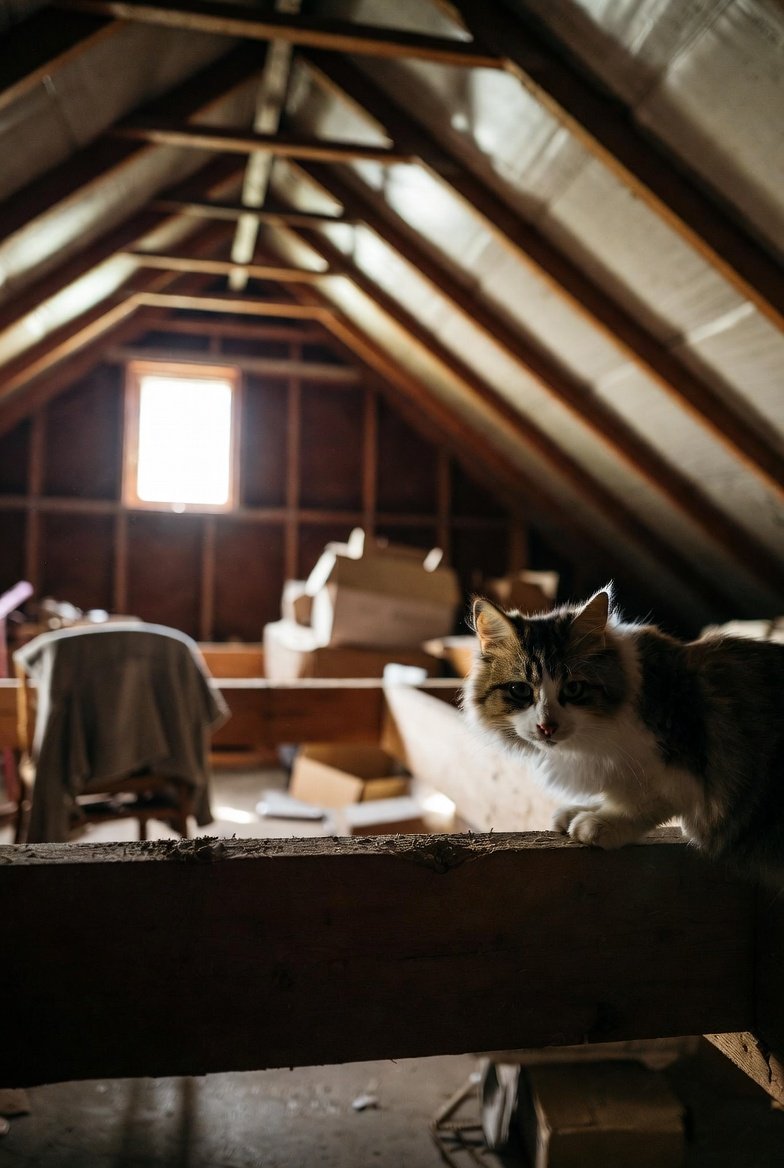
Animal in Attic: What It Means and What to Do Next
An attic animal problem rarely announces itself politely.
It’s usually a sound at the wrong time—scratching when the house is quiet, a sudden thump above the ceiling, or little “runs” that make you stop mid-sentence. Sometimes you don’t hear anything at all. You just notice insulation shifted near the eaves, a vent screen that looks bent, or a smell that wasn’t there last week.
This situation is part of broader pest control services that focus on inspection, removal, and exclusion.
And that’s the frustrating part: the phrase “animal in attic” is broad. It can mean rats, mice, squirrels, raccoons, bats, birds, or something else entirely.
This page is built to do three jobs:
Help you identify the likely animal quickly (without risky guesswork).
Give you a safe first-24-hours plan (so you don’t accidentally trap it inside or create a stink problem).
Route you to the right decision page (rats vs squirrels vs larger wildlife) so your next step actually works.
First: What to Do in the Next 24 Hours
1) Don’t seal holes yet
Sealing entry points before you’re sure the animal is out is the most common mistake. It can trap an animal inside, cause more damage, or create a dead-animal odor situation.
The rule you’ll see repeated in wildlife exclusion guidance is simple: confirm the animals are gone first, then seal.
2) Don’t use poison
If the “animal” is rodents, poison can lead to rats/mice dying in walls or insulation—hard to reach, hard to remove, and the smell can linger. The cleaner approach for rodents is usually trapping/monitoring + exclusion (keeping them out).
3) Keep it calm and contained
Keep pets and kids away from attic access points.
Avoid heavy disturbance (especially if nesting is possible).
If you smell strong odor, assume contamination may be present.
4) Start with timing
Your fastest clue is when the noise happens.
Fast Identification: Noise Timing + Sound Type
You don’t need perfect certainty on day one. You need a strong “most likely.”
Table: Noise timing → likely attic animal
What you hear Most likely Why it fits
Light scratching / quick scurrying at night Rats / mice Nocturnal activity patterns are common for rodents
Scampering / running during daytime Squirrels Often active in daylight
Heavy thumps, dragging, “walking” at night Raccoon / larger wildlife Heavier body = louder, slower movement
Fluttering or chirping near vents/chimney Birds Nesting and movement near openings
Activity clustered around dusk/dawn Bats (possible) Roost and exit timing often aligns with twilight
This table is intentionally practical. Your next step is to confirm with one or two physical clues—without getting too close.
Quick Clues You Can Check Safely
If you can do so without risk (and you’re not crawling deep into the attic), look near the attic hatch and along the edges/eaves with a flashlight.
Signs that point toward rodents (rats/mice)
Small droppings along edges or near stored items
Gnaw marks on wood/plastic
Rub/grease marks near openings
Urine/ammonia smell
“Tunnels” in insulation
If you find droppings, handle cleanup safely (see below).
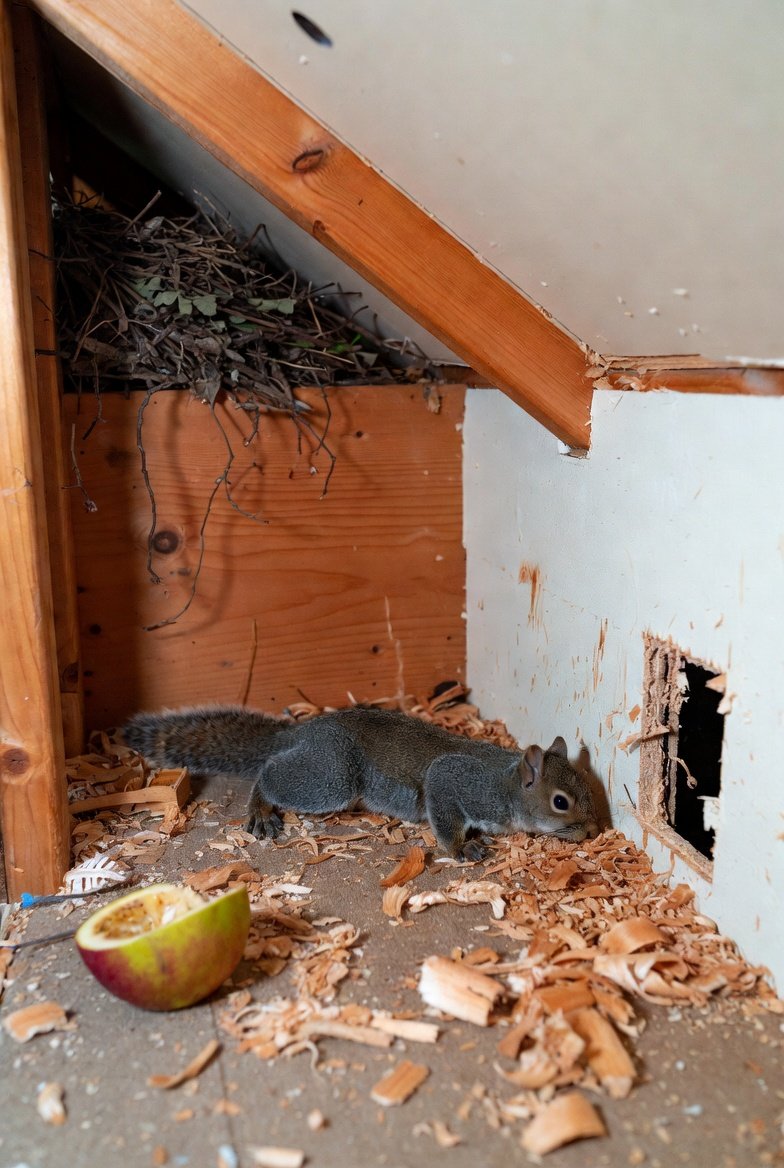
Signs that point toward squirrels
Daytime noise is a strong hint
Nesting near eaves
Visible entry damage around roofline/soffit areas
Insulation pulled into a nest pocket
Signs that point toward raccoons (or larger wildlife)
Loud nighttime thumps and heavier movement
Larger disturbed areas and stronger odors
Bigger entry damage (soffit or roofline breaches)
Signs that point toward birds
Chirping or nesting sounds
Twigs/feathers near vents or chimney
Activity concentrated at one opening
Signs that point toward bats
Bats are a special case because legal protections can apply in many areas and timing/maternity seasons matter. If bats are possible, it’s often smarter to use professional guidance rather than improvised removal. (This page routes you to a “bats in attic” decision page if you publish one later.)
How Do Animals Get Into an Attic?
Most attic intrusions happen through the same few weak points:
Soffits and fascia corners (rot, storm damage, gaps)
Gable ends and vent screens that aren’t animal-resistant
Roof and soffit vents with loose or damaged screening
Chimneys without proper caps or with flashing gaps
Dryer/bathroom vents and other penetrations
Utility lines and pipe penetrations near roofline
Tree branches touching the roof (easy access for squirrels)
University extension guidance on nuisance wildlife points directly to sealing entry points in attics, chimneys, and eaves as core prevention.
Another extension publication lists common entry locations like chimneys, soffit vents, gables, windows/doors, and dryer vents.
DIY vs Pro: Decision Boundaries That Prevent Wasted Weeks
This is where people get stuck. They either:
panic and overreact, or
downplay it and “wait it out,” then the situation grows.
Use boundaries.
DIY may be reasonable when
The activity seems light and short-lived
You can safely access the attic and exterior entry area
You can identify a likely entry point
You’re prepared to do proper exclusion after eviction (not just “hope it stops”)
Call a pro when
You hear heavy movement (raccoon-level thumps)
You suspect multiple entry points
The smell is strong (possible contamination or dead animal risk)
You can’t safely access roofline/attic areas
There may be babies/nesting
You tried DIY for several days and activity continues
You suspect bats (legal/seasonal constraints may apply)
One practical industry rule that matches how pros work: don’t seal openings until you’re absolutely certain no animals are using them.
How to Get Animals Out of the Attic (Safe Sequence)
The best plans are boringly consistent:
Step 1: Identify the likely animal
Use timing and clues. Then route to the right plan.
Step 2: Locate entry/exit points
This often requires an exterior walk-around:
roofline corners
soffit edges
gable vents
chimney area
vent screens
Step 3: Use an eviction/removal method that matches the animal
For some wildlife (commonly squirrels and raccoons), one-way exclusion devices are used so the animal can exit but not re-enter—when installed correctly and paired with sealing other gaps.
Step 4: Confirm the attic is clear
A practical “clear” check usually means:
no activity for several nights/days (depending on animal)
no new tracks/signs at the exit point
monitored confirmation before closing the last opening
Step 5: Seal and reinforce entry points
This is the permanent fix. Wildlife exclusion guidance repeatedly emphasizes sealing after you’re sure the animals are gone.
If the animal was a rodent, remember how small gaps matter: the National Park Service rodent control service proofing manual notes rats can enter through holes larger than 1/2 inch and mice through holes larger than 1/4 inch.
Step 6: Clean up safely
Especially important for rodent droppings cleanup
Cleanup Safety (Rodents): What to Do if You Find Droppings
If you find droppings or urine, don’t dry sweep and don’t vacuum first.
CDC guidance is clear:
Put on gloves
Spray urine/droppings with bleach solution or an EPA-registered disinfectant until very wet
Let it soak for 5 minutes (or per disinfectant label)
Wipe up with paper towels and dispose properly
If contamination is widespread in insulation, that’s a strong boundary for professional cleanup or insulation replacement.
What Happens If You Ignore an Attic Animal
Not fear—just what usually unfolds.
Table: Typical progression
Time What often changes Why it matters
24–72 hours More repeat activity, clearer routes Animals settle into patterns
7 days Nesting/insulation disturbance grows Damage increases
30 days Higher risk of contamination, odors, or secondary pests Costs go up
Routing: Pick the Right Next Page
Use this section like a map.
Mostly night scratching + droppings/urine smell → Rats in Attic
Daytime scampering near roof edges → Squirrels in Attic (publish if you’re building it)
Heavy nighttime thumps → Raccoon in Attic (publish if you’re building it)
Fluttering/chirping at one vent or chimney → Birds in Attic Vent (support/decision)
Dusk/dawn activity + small gaps → Bats in Attic (often pro-guided)
Unsure but activity repeats → Start with Rat droppings in attic and follow the confirm steps
What a Good Pro Will Do (So You Can Judge Competence)
A competent service typically:
Confirms species (or evidence-based best guess)
Locates primary and secondary entry points
Uses appropriate removal/eviction methods
Provides exclusion repairs or a clear exclusion plan
Advises on sanitation and prevention
If they only want to “set something” without talking about entry points, you’re likely paying for a temporary dip, not a solution.
Prevention After Removal
Once the attic is quiet and clear:
Repair soffits/fascia and reinforce vent screens
Cap chimneys properly and maintain flashing
Block gable entries with hardware cloth/screening that preserves airflow
Cover vents appropriately (including dryer vents) with animal-resistant screening
Trim branches away from roof access paths
Re-inspect after storms
Prevention is the long-term ROI move: fewer repeats, fewer surprise costs.
Quick Verdict
For an animal in the attic, the winning formula is: identify → remove/evict correctly → confirm clear → seal entry points → clean safely → prevent return. The biggest mistakes are sealing too early and skipping exclusion.