
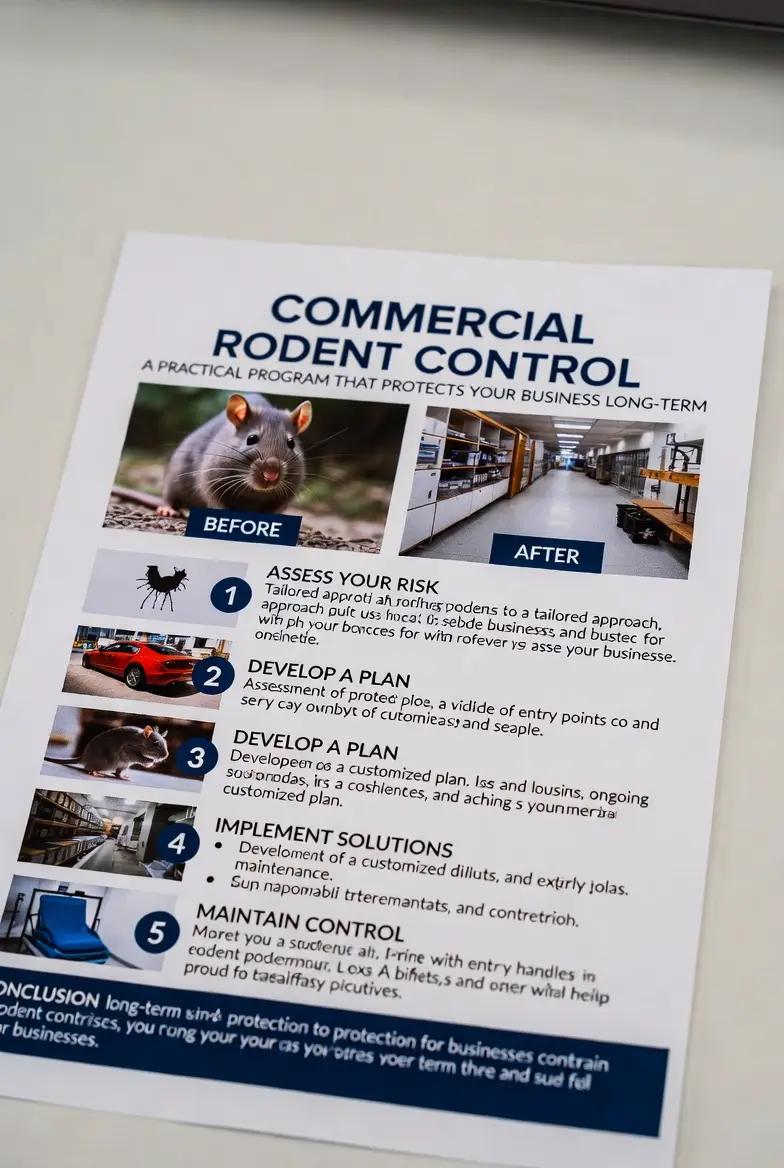
Commercial Rodent Control: A Practical Program That Protects Your Business Long-Term
Commercial rodent issues don’t just create a nuisance. They create operational friction: staff complaints, inventory loss, equipment damage, customer risk, and—depending on the business—inspection pressure.
That’s why the best commercial Rodent Pest Control Services isn’t “put traps down and hope.” It’s a repeatable program built around Integrated Pest Management (IPM): prevention first (exclusion + sanitation), monitoring, targeted control methods, and documentation that proves the problem is being managed. EPA’s building IPM guidance highlights monitoring pest-vulnerable areas and keeping records of monitoring techniques, locations, schedules, and results—then updating the plan based on what you find.
Quick Verdict
If a commercial vendor can’t explain exclusion, monitoring, and documentation—your results will usually be temporary, especially around docks, waste areas, and storage zones.
What Commercial Rodent Control Includes (The Program, Not the “Visit”)
Most strong commercial programs have five parts:
1) Site Inspection + Risk Mapping
A real inspection maps:
Entry points (dock doors, door thresholds, utility penetrations, roofline gaps, vents)
Evidence zones (droppings, rub marks, gnawing, burrows)
Conditions that support activity (food waste patterns, water sources, clutter/harborage)
Seasonal or operational triggers (delivery schedules, compactor servicing, landscaping)
This aligns with IPM: you can’t manage what you haven’t surveyed.
2) Exclusion and Proofing (The “Stay Fixed” Work)
In commercial buildings, exclusion is often the “make or break” layer:
Door sweeps and threshold sealing (especially receiving/docks)
Sealing utility penetrations and structural gaps
Reinforcing vents and weak access points
Correcting recurring “construction gaps” rodents exploit
IPM for rodents repeatedly emphasizes exclusion and sanitation as core long-term controls.
3) Monitoring Devices + Placement Strategy
Commercial monitoring is usually ongoing because conditions change:
Trap stations in non-sensitive areas
Monitoring points in high-risk zones
Exterior devices where pressure is highest
Monitoring is explicitly called out in building IPM guidance as routine and essential, with recordkeeping of results and recommendations.
4) Targeted Control (Traps and/or Baiting Where Appropriate)
Commercial control is best when it’s targeted, not scattered:
Methods are placed based on evidence and risk zones
Adjusted based on monitoring data
Coordinated with sanitation and exclusion
For food-related operations, model Food Code language includes that rodent bait must be in a covered, tamper-resistant bait station—a good vendor will already operate this way where it applies.
5) Documentation + Corrective Actions
Commercial programs should generate a “paper trail” that helps you manage the facility—not bury you.
EPA IPM guidance stresses maintaining records for each building: monitoring locations, inspection schedules, monitoring results, inspection findings, and recommendations.
Extension guidance also emphasizes recordkeeping as part of pest control programs.
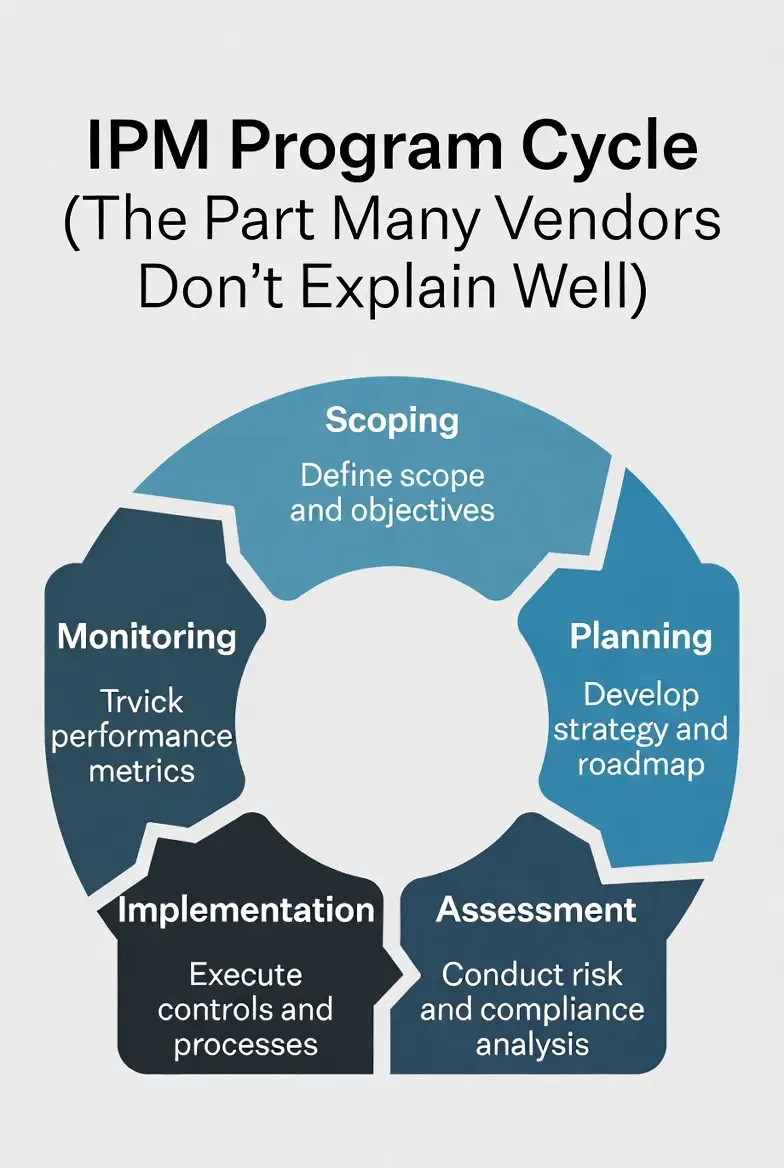
The IPM Program Cycle (The Part Many Vendors Don’t Explain Well)
A clean way to understand commercial rodent control is as a cycle:
Survey (inspect and map evidence)
Set tolerance limits / action thresholds (what triggers action and where)
Intervention (exclusion + sanitation + targeted control)
Evaluation (monitor results and update the plan)
CDC’s urban rodent IPM framework highlights these key components and warns that omitting one reduces success.
This cycle is what turns “random activity” into “measurable management.”
High-Risk Zones in Most Commercial Buildings (Use This to Self-Audit)
Zone Why rodents like it What a good vendor does
Receiving
dock doors frequent open doors, gaps, pallets threshold proofing, device strategy, fast monitoring
Waste
compactor area food residue, shelter exclusion + sanitation loops + exterior monitoring
Storage
back rooms clutter, long-stay inventory harborage reduction + monitoring points
Break rooms
vending food access sanitation guidance + quick response to sightings
Mechanical rooms
penetrations, warmth sealing + targeted monitoring
Ceiling voids
wall voids hidden travel routes evidence mapping + adjust plan based on findings
Timeline:
What “Progress” Looks Like in Commercial Rodent Control
Timeframe What you should expect What can slow it down
First 72 hours baseline inspection + device placement + entry points list limited access, no after-hours entry, missing site contacts
7–14 days activity concentrates; fewer surprises; early reduction signs dock doors left open, sanitation drift, unsealed gaps
2–6 weeks sustained reduction if exclusion and corrective actions are completed multi-tenant pressure, neighboring properties, unmanaged waste zones
Ongoing stable low activity with trend monitoring seasonal changes, renovations, layout changes
If you’re paying for service but evidence never trends down over weeks, it usually means exclusion or corrective actions aren’t being completed—or the program lacks reliable monitoring.
Documentation: What You Should Receive (Audit-Ready but Not Overwhelming)
A strong vendor can provide documentation that’s actually usable. At minimum, ask for:
Service visit logs (date/time, areas inspected, actions taken)
Device list/map (what devices, where they are placed)
Findings (evidence observed: droppings, gnawing, rub marks)
Monitoring results (activity levels over time)
Corrective actions (what the facility must fix and by when)
Trend notes (where pressure is rising or falling)
EPA building IPM guidance explicitly supports keeping records of monitoring locations/schedules and recording monitoring results and inspection findings with recommendations.
Rodent Droppings Cleanup: Clear Safety Boundary for Businesses
Rodent Droppings Cleanup (Wet Method for Facilities)
In commercial environments, cleanup should be defined and consistent—because sweeping/vacuuming can spread contaminated dust.
CDC guidance recommends not vacuuming or using high-pressure sprayers on rodent urine/droppings until they’ve been disinfected, and describes a wet-disinfect method (soak, wait, wipe, then clean the area).
Health department guidance similarly warns against vacuuming/sweeping/stirring dust in contaminated areas.
Practical decision point:
clarify in writing whether your staff or the vendor handles cleanup and what method is required.
Commercial Pricing:
What Actually Drives Cost (Without Guesswork)
Commercial pricing is usually driven by:
Facility size and layout complexity
Industry risk level (food, retail, warehouse, healthcare)
Service frequency (weekly/biweekly/monthly)
Exclusion scope (minor sealing vs substantial proofing)
Monitoring intensity and documentation requirements
Access requirements (after-hours, sensitive areas)
Service Scope Ladder (Compare Vendors This Way)
Scope Includes Best for
Basic devices + periodic checks low-pressure offices
IPM program exclusion + monitoring + documentation + corrective actions most commercial facilities
IPM + compliance support adds audit-friendly reporting, staff guidance, cleanup protocols food/regulated environments
How to Choose a Commercial Vendor (Questions + Red Flags)
Questions to ask
Rodent Pest Control Services (Program Scope & Expectations)
Do you run an IPM program (exclusion + sanitation + monitoring), or mainly devices?
What documentation will we receive each visit (logs, device map, corrective actions)?
How do you handle receiving/dock doors and waste zones (common pressure points)?
How do you define success—what evidence should trend down and when?
Who is responsible for droppings cleanup and what method is required?
What changes do you need from our team to keep results stable?
Red flags
No exclusion plan (or “we’ll get to it later” with no timeline)
No corrective action process (everything is “our problem,” nothing is “your building”)
Vague documentation or none at all
Heavy emphasis on baiting without prevention or monitoring strategy
Limitations / Drawbacks (Balanced and Realistic)
Commercial-Grade Rodent Pest Control Services
Commercial rodent control is rarely solved in one visit; it’s a program cycle.
Exclusion and documentation can increase upfront cost, but they’re often what reduces repeat issues over time.
If dock doors remain open, waste zones stay dirty, or corrective actions aren’t completed, results can plateau.
In multi-tenant buildings, neighboring practices can keep pressure high—monitoring and documentation help you pinpoint this.