
Rat Nest in Attic: What It Means and What to Do Next
Most attic discoveries follow the same pattern.
You open the hatch.
You shine a light.
You notice a dense pocket of shredded material tucked between joists.
The instinct is to remove it immediately.
The smarter move is to pause.
A rat nest in the attic is not just debris.
It’s proof of access, movement, and structural vulnerability.
The real issue isn’t the nest itself.
It’s whether the infestation is active — and whether contamination extends beyond what you can see.
This guide walks through:
- How to confirm if the nest is active
• How to remove it safely
• When insulation must be replaced
• Realistic 2026 cost ranges
• How to prevent repeat attic nesting
Handled in the correct order, most cases stabilize quickly.
Handled partially, they repeat.
Why Rats Build Nests in Attics
Rats choose attic spaces because they provide:
- Stable temperatures
• Elevated protection from predators
• Low human disturbance
• Insulation material for breeding
Female rats can produce multiple litters per year. That means a single overlooked nest can expand rapidly.
Seasonal pressure increases risk:
- Fall migration in colder regions
• Winter shelter-seeking behavior
• Extreme summer heat displacement in southern states
Waiting is not neutral.
Nest size and contamination volume increase over time.
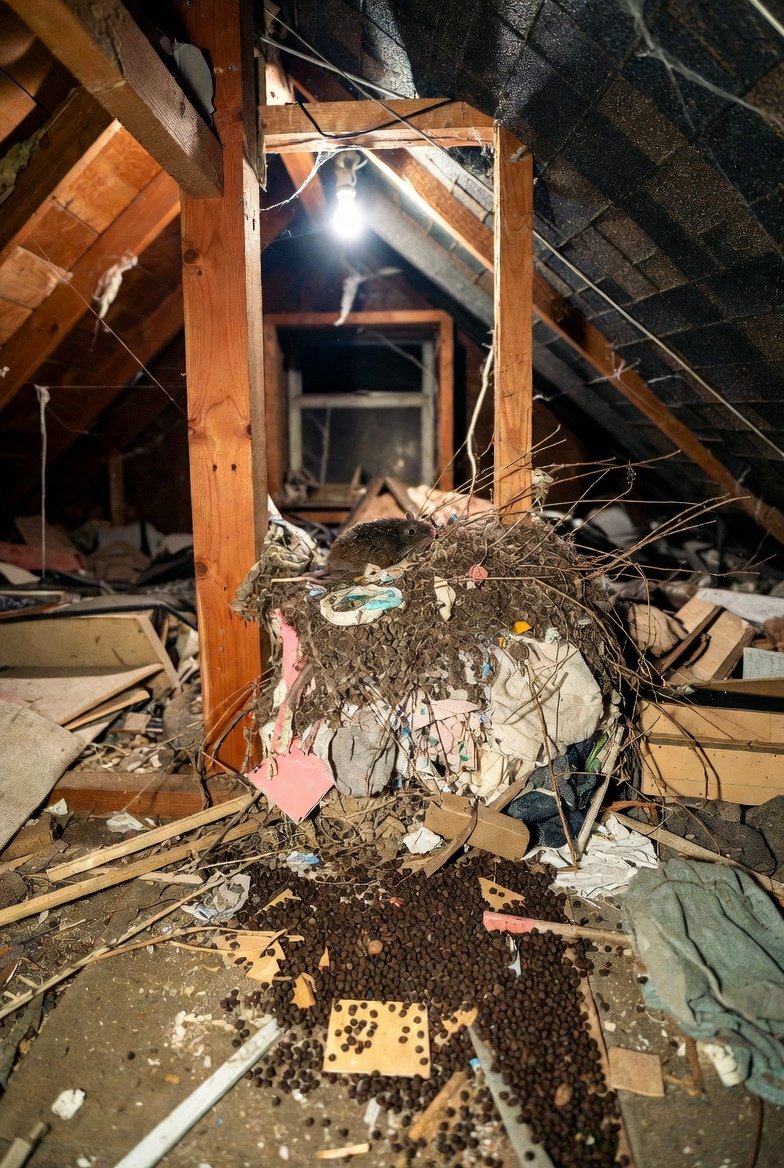
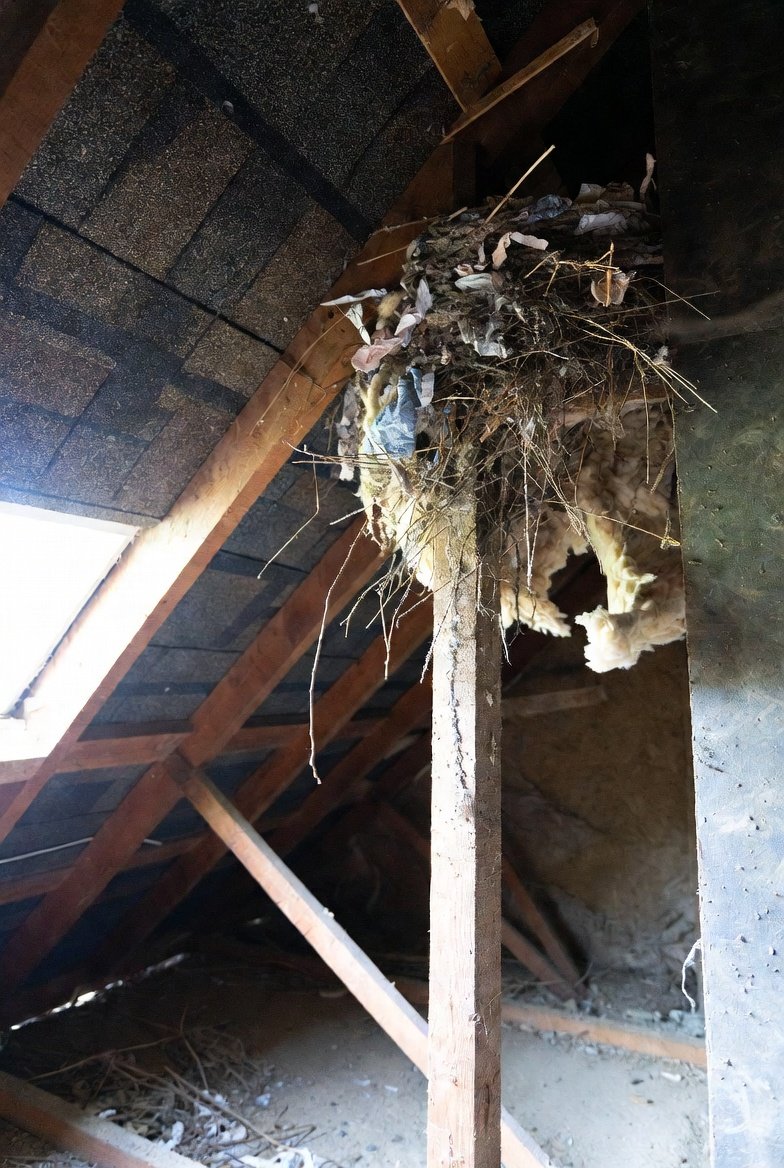
What a Rat Nest in an Attic Looks Like
Attic nests are typically:
- Shredded insulation clumps
• Torn cardboard or fabric
• Packed leaves pulled through soffits
• Hidden along perimeter edges
They are often located:
- Near roofline transitions
• Around HVAC chases
• Along attic perimeter walls
• Beneath insulation tunnels
If droppings are present, review rat poop in attic to determine whether contamination is active.
Is the Nest Active or Abandoned?
Signs of an Active Nest
- Fresh glossy droppings
• Ongoing scratching at night
• Grease rub marks
• Chewed wiring
• Warm nesting pocket
If scratching continues, confirm species timing using:
Animal in attic scratching at night
If activity is ongoing, removal must happen before cleanup.
Nest vs Runway vs Random Disturbance
You See | Likely Meaning | Recommended Action |
Single shredded pocket | Early nesting | Remove + inspect |
Multiple tunnels in insulation | Established colony | Removal + exclusion |
Scattered droppings only | Transit activity | Monitor 24–48 hrs |
Multiple nest pockets | Breeding cycle active | Professional service likely |
Insulation tunnels indicate repeated traffic, not isolated presence.
The Correct Order (Critical)
- Remove rodents
- Confirm quiet period
- Seal entry points
- Clean and remediate
Skipping step 3 is why nests return.
If removal hasn’t happened yet, follow the full process outlined in:
Do NOT Seal Entry Points Too Early
Sealing while rats are still inside can trap them in:
- Wall voids
• Ceiling cavities
• HVAC chases
Removal must precede sealing.
To understand how rats accessed the attic in the first place:
Safe Nest Removal Steps
Step 1: Protective Equipment
Minimum:
- Gloves
• Eye protection
• Respirator (for moderate/heavy contamination)
Step 2: Disinfect Before Disturbing
Public health guidance recommends wetting droppings and nesting material before removal to reduce airborne particles.
Never:
- Dry sweep
• Vacuum untreated droppings
• Shake contaminated insulation
Step 3: Remove Carefully
- Double-bag debris
• Wipe surrounding surfaces
• Apply secondary disinfectant
When Insulation Must Be Replaced
Insulation absorbs:
- Urine
• Odor compounds
• Bacteria
Over time this causes:
- Persistent ammonia smell
• Reduced R-value
• Energy efficiency loss
• Seasonal odor re-release in warm weather
Insulation should be evaluated for replacement when:
- Odor persists
• Tunnels are widespread
• Fibers are matted
• Wiring damage is visible
Electrical Risk Layer
Rats chew continuously to manage tooth growth.
Attic wiring becomes exposed when insulation is displaced.
Rodent chewing increases fire risk — especially in older homes with exposed cabling.
If chew marks are visible, escalate beyond DIY cleanup.
Realistic 2026 Cost Ranges
Three separate cost categories typically apply:
Rodent Removal
$200–$600 (light cases)
Exclusion Work
$600–$1,500+ depending on roofline complexity
Attic Remediation
$500–$2,000+ depending on:
- Square footage
• Insulation replacement
• Odor neutralization
• Labor access
Severe cases can exceed $3,000 when full insulation replacement is required.
DIY vs Professional Break-Even
Scenario | DIY Feasible | Professional Recommended |
Single inactive nest | ✔ | |
Active nesting | ✔ | |
Insulation damage >25% | ✔ | |
Strong ammonia odor | ✔ | |
Wiring damage visible | ✔ |
If contamination exceeds roughly one-quarter of attic space, structured service becomes more efficient.
Why Rat Nests Come Back
Repeat nesting usually happens because:
- Entry points weren’t sealed
• Branches still contact roofline
• Vent screens weren’t reinforced
• Seasonal pressure wasn’t addressed
True resolution requires:
Removal → Exclusion → Remediation
Not surface cleaning alone.
Decision Matrix
Best case → Small inactive nest → Remove + inspect
Most common → Active nesting → Removal + exclusion
Worst case → Multiple nests + insulation damage → Full remediation
The Bottom Line
A rat nest in the attic signals:
- Rodent access
• Structural vulnerability
• Potential contamination
Handled early and in the correct sequence, most cases stabilize quickly.
Handled partially, they repeat.