
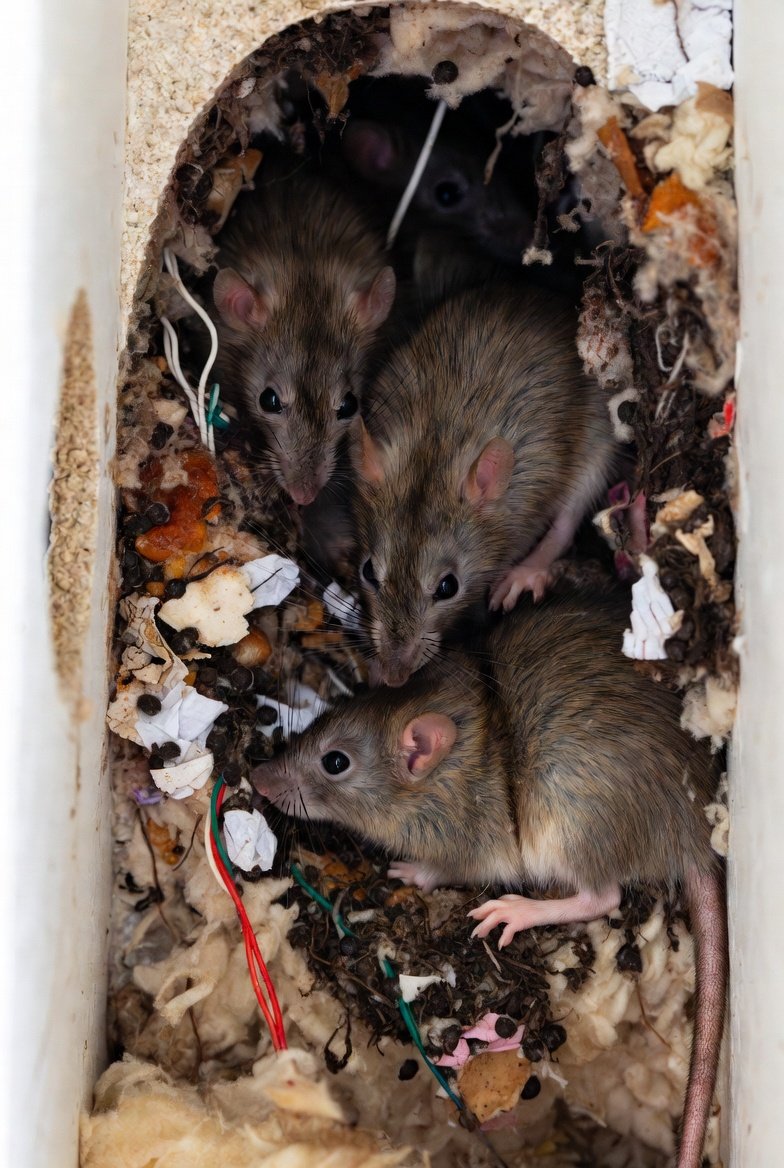
Rat Nest in Wall: Identification, Risk Levels, and What to Do Next
Most people don’t see the nest.
They hear the wall.
A repeated scratch in the same stud bay.
A heavy drag behind drywall.
A persistent odor that doesn’t dissipate.
Before opening the wall, confirm one thing:
Is this transit activity — or an actual rat nest inside the wall cavity?
That distinction changes everything.
Quick Diagnostic Snapshot (Fast Confirmation)
Indicator | Suggests Transit | Suggests Nest |
Noise timing | Night only | Night + occasional day |
Location | Moves room to room | Same wall zone repeatedly |
Droppings | Scattered | Clustered within 3 ft |
Odor | Minimal | Ammonia present |
Duration | <1 week | Persistent >7 days |
If noise repeats in the same vertical wall section and odor develops, nest probability increases significantly.
If droppings measure 10–20 mm and are capsule-shaped, confirm species first:
Species affects removal strategy.
Nest vs Transit: The Critical Difference
Rats use wall cavities as highways.
They build nests where:
- Heat is stable
- Insulation provides cover
- Human disturbance is minimal
- Food access is nearby
Transit activity moves.
Nests anchor.
If scratching remains centered in one stud bay over multiple nights, nesting is likely.
Nest Likelihood Score (0–10)
Add points for each condition:
+2 Repeated scratching in same wall zone
+2 Strong ammonia odor
+2 Droppings clustered tightly
+2 Daytime activity present
+2 Insulation disturbance or gnaw marks
Score 0–3 → Likely transit
Score 4–6 → Probable nesting
Score 7–10 → Active wall nest highly likely
This measurable approach prevents premature drywall removal.
Where Rats Nest Inside Walls (Structural Map)
High-probability nesting zones:
- Garage-to-house shared walls
• Behind bathtubs and shower enclosures
• Chimney chase cavities
• Utility riser shafts
• Above drop ceilings
• Attic-to-top-plate transitions
Wall cavities connected to attic insulation are especially vulnerable.
If activity overlaps attic space, review:
Animal in Attic Scratching at Night
Walls often connect directly to attic runways.
Nest Material Identification
Rats build nests using:
- Shredded insulation
• Paper
• Fabric
• Plastic
• Cardboard
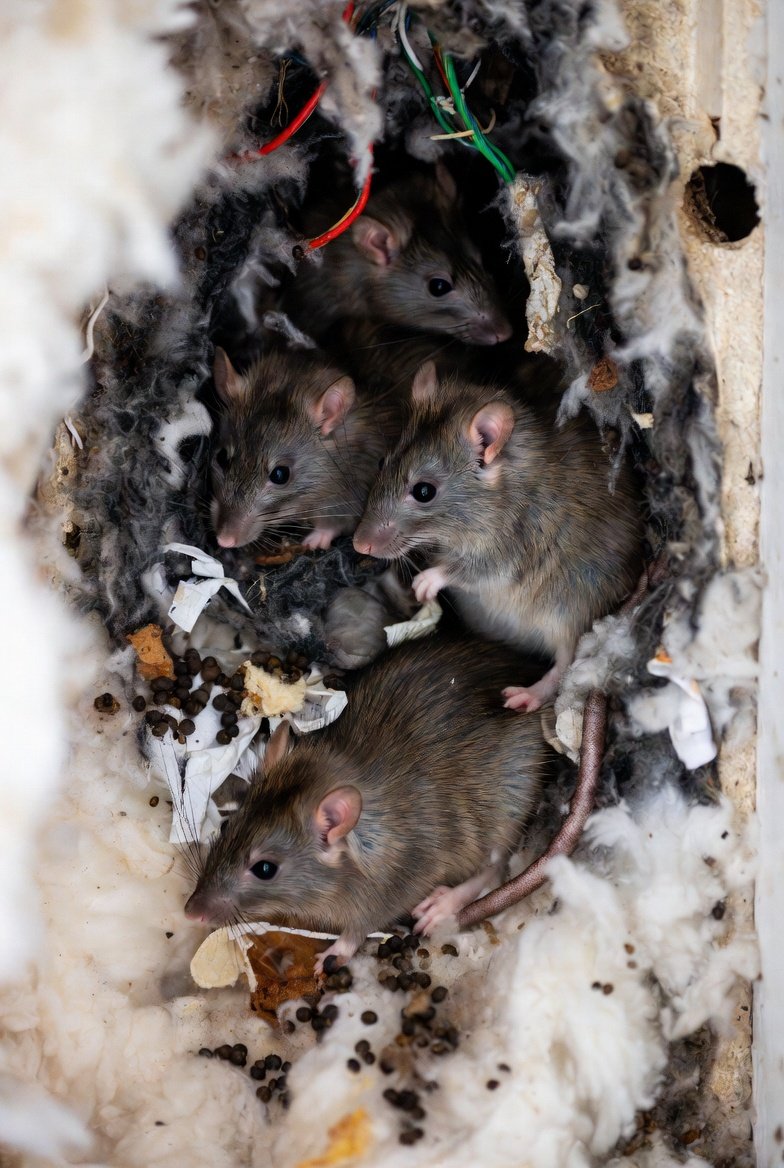
Inside walls, insulation compression or tunneling is common.
If drywall feels warm in a localized section, nesting heat retention may be occurring.
Contamination & Structural Risk Scale
Level | Condition | Risk | Action |
Level 1 | Transit only | Low | Monitor + trap |
Level 2 | Early nesting signs | Moderate | Trap + inspect exterior |
Level 3 | Established nest + odor | Elevated | Removal + exclusion |
Level 4 | Multi-wall activity | High | Professional removal + remediation |
If contamination extends into insulation:
Rat Poop in Attic
Wall contamination often migrates upward via airflow.
Monitoring Method (72-Hour Nest Confirmation)
Before cutting drywall:
- Place snap traps along baseboards
• Listen at same time nightly
• Mark wall zone with tape
• Check for new droppings
If captures occur near same cavity repeatedly, nest location confirmed.
Avoid poison inside wall cavities.
Decomposition creates persistent structural odor.
Correct Removal Sequence (Order Matters)
Step 1: Confirm Species & Nest Probability
Use measurement and Nest Likelihood Score.
Step 2: Interior Trap Staging
Rats are cautious.
Place traps:
- Along wall edges
• Near travel paths
• Pre-bait unset for 24–48 hours if needed
Step 3: Exterior Exclusion
Inspect:
- Foundation gaps
• Roofline transitions
• Utility penetrations
• Vent covers
Seal only after trapping begins.
Step 4: Evaluate for Wall Access
Do NOT open drywall unless:
- Odor persists after trapping
• Multiple captures continue
• Insulation disturbance confirmed
• Activity lasts beyond 14 days
For structural removal solutions:
Rodent Removal (Attic & Structural)
Break-Even Escalation Logic
DIY Range:
$50–$200
Professional Wall Access:
$400–$1,200+
Remediation:
$800–$3,000+
Escalate when:
- More than 2–3 captures weekly
• Nest Likelihood Score ≥7
• Multi-room wall activity
• Insulation contamination visible
If reproduction outpaces capture, professional exclusion becomes more cost-effective.
Three Mistakes That Make It Worse
- Sealing before trapping
• Using rodenticide inside walls
• Opening drywall without exclusion
Correct order:
Identify → Remove → Exclude → Remediate
Limitations
This guide applies to:
- Residential wood-frame homes
• Rat-scale infestations
It does not replace:
- Large-scale structural rat infestations
• Electrical safety inspection
• Severe insulation remediation
If contamination spans attic and walls, full remediation assessment may be required.
Decision Matrix
Noise shifts rooms → Transit
Repeated same cavity noise → Nest likely
Daytime activity + odor → Removal + exclusion
Multi-wall zones → Professional structural removal
Bottom Line
A rat nest in a wall is not random movement.
It is anchored activity.
Measure.
Score likelihood.
Trap before sealing.
Open walls only when justified.
Sequence determines containment.