
Rat Poop in Attic: What It Means, How to Clean It Safely, and When It’s a Bigger Problem
Most attic discoveries follow the same pattern.
You lift the hatch.
You shine a light.
You see small dark pellets across insulation.
The instinct is to clean it immediately.
The smarter move is to pause.
Rat poop in an attic is not just debris.
It’s evidence of access, movement, and possible structural vulnerability.
The real issue isn’t the droppings.
It’s whether the infestation is active — and whether contamination extends deeper than you think.
This guide walks through identification, contamination severity, safe cleanup sequencing, insulation science, cost expectations, regional pressure patterns, and when professional pest control becomes the logical step.
How to Identify Rat Poop in an Attic
Correct identification determines your response strategy.
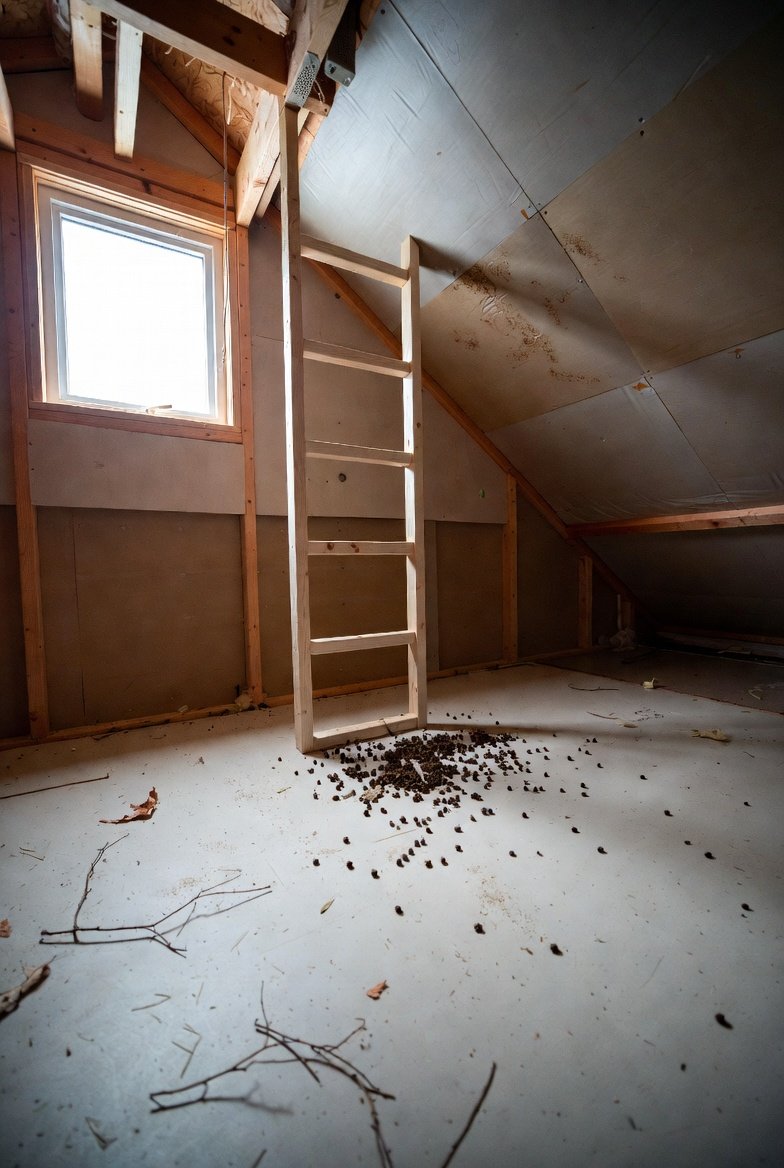
What Rat Droppings Look Like
- ½–¾ inch long
• Capsule-shaped with blunt ends
• Dark brown or black
• Often clustered along beams or insulation travel paths
Rat vs Mouse Comparison
Feature | Rat | Mouse |
Size | Larger (½–¾”) | Smaller (¼”) |
Ends | Blunt | Pointed |
Spread pattern | Along structural runways | Scattered randomly |
Contamination zone | Wider | Smaller |
If unsure, cross-check signs with how to get rodents out of attic before starting cleanup.
How to get rodents out of attic
Fresh vs Old Droppings — Is the Problem Active?
Indicator | Fresh | Old |
Color | Glossy dark | Faded gray |
Texture | Soft | Dry, crumbly |
Smell | Light ammonia | Minimal |
Meaning | Active activity likely | Past presence possible |
If new droppings appear within 24–48 hours, removal must happen first via rodent removal.
Cleaning alone will not solve active infestation.
What Rat Poop in an Attic Really Signals
Droppings rarely exist alone.
Attic infestations usually include:
- Urine saturation in insulation
• Grease rub marks along beams
• Nesting cavities
• Chewed wood and wiring
• Insulation compression tunnels
Electrical damage is common in attic rodent cases. Industry fire data attributes roughly a quarter of rodent-related house fires to wire chewing.
So droppings are often the visible tip of a deeper structural issue.
Contamination Severity Scale (Attic-Specific)
Level | Condition | Recommended Action |
Light | Scattered pellets, dry | Careful DIY cleanup |
Moderate | Clusters + light odor | Enhanced PPE |
Heavy | Matted insulation + strong odor | Likely pro help |
Severe | Large nesting zones + insulation collapse | Professional remediation |
Attics increase exposure risk because:
- Ventilation is limited
• Dust accumulates
• Insulation traps contaminants
Disturbing droppings without disinfecting first increases airborne particle risk.
Geographic Pressure Patterns (When Region Changes Risk)
Rodent attic activity varies by climate:
- Northeast & Midwest: Fall migration spikes attic intrusions.
• Southern states: Heat displacement drives attic shelter during extreme summer temperatures.
• Urban row housing: Shared rooflines increase access.
• Wooded suburbs: Tree limbs within 6–8 feet of the roof dramatically increase entry risk.
If droppings appear during seasonal transitions, it often indicates active nesting rather than historical presence.
Understanding how rats accessed your roofline is critical — see how do rats get in the attic before sealing gaps.
Safe Cleanup Protocol (Correct Order)
Step 1: Confirm Removal First
If scratching or fresh droppings continue, resolve elimination through attic pest control before deep cleaning.
Attic pest control
Step 2: Ventilate
Allow airflow before disturbing debris.
Step 3: Protective Equipment
Minimum:
- Gloves
• Eye protection
• Respirator for moderate-heavy contamination
Step 4: Disinfect Before Disturbing
Lightly saturate droppings and affected insulation.
Allow dwell time.
Step 5: Remove Carefully
Use disposable towels or scooping tools.
Double-bag waste.
Step 6: Secondary Disinfection
Wipe surrounding surfaces.
Never dry sweep or vacuum untreated droppings.
When Insulation Must Be Removed
Insulation acts like a sponge.
Fiberglass and cellulose absorb:
- Urine
• Bacteria
• Odor compounds
When temperatures rise, trapped ammonia can re-release into attic airspace.
Insulation removal is often necessary when:
- Odor persists after cleaning
• Insulation is visibly matted
• Urine saturation is extensive
• R-value has collapsed
This is why remediation costs sometimes exceed basic cleanup.
Cost Breakdown (Realistic 2026 Ranges)
Attic rodent cases usually include three separate costs:
Rodent Removal
$200–$600 (light cases)
Exclusion Work
$600–$1,500+ depending on roofline complexity
Attic Remediation
$500–$2,000+ depending on:
- Square footage
• Insulation replacement
• Odor neutralization
• Labor access difficulty
Severe cases can exceed $3,000 when full insulation replacement is required.
DIY vs Professional — Practical Break-Even Logic
Scenario | DIY Feasible | Professional Recommended |
Light isolated droppings | ✔ | |
Moderate contamination | Depends on access | Often |
Heavy insulation damage | ✔ | |
Strong odor persists | ✔ | |
Electrical chewing visible | ✔ |
If contamination covers more than 20–30% of attic area, professional remediation often becomes more efficient long-term.
Why Cleanup Alone Often Fails
Most repeat attic cases happen because:
- Entry points weren’t sealed
• Branches still contact roofline
• Insulation remained saturated
• Seasonal rodent pressure wasn’t addressed
True resolution requires:
Removal → Exclusion → Remediation
Not just surface cleaning.
For broader prevention planning, see pest prevention.
When to Call Pest Control Immediately
Escalate if:
- Droppings appear daily
• Ammonia odor is strong
• Wiring damage is visible
• Insulation is heavily tunneled
• You cannot safely access attic space
In those cases, structured service prevents under-reaction and repeat contamination.
The Bottom Line
Rat poop in an attic is diagnostic.
It signals:
- Rodent access
• Potential contamination
• Structural vulnerability
Handled early and in the correct sequence, most situations stabilize quickly.
Handled partially, they repeat.