
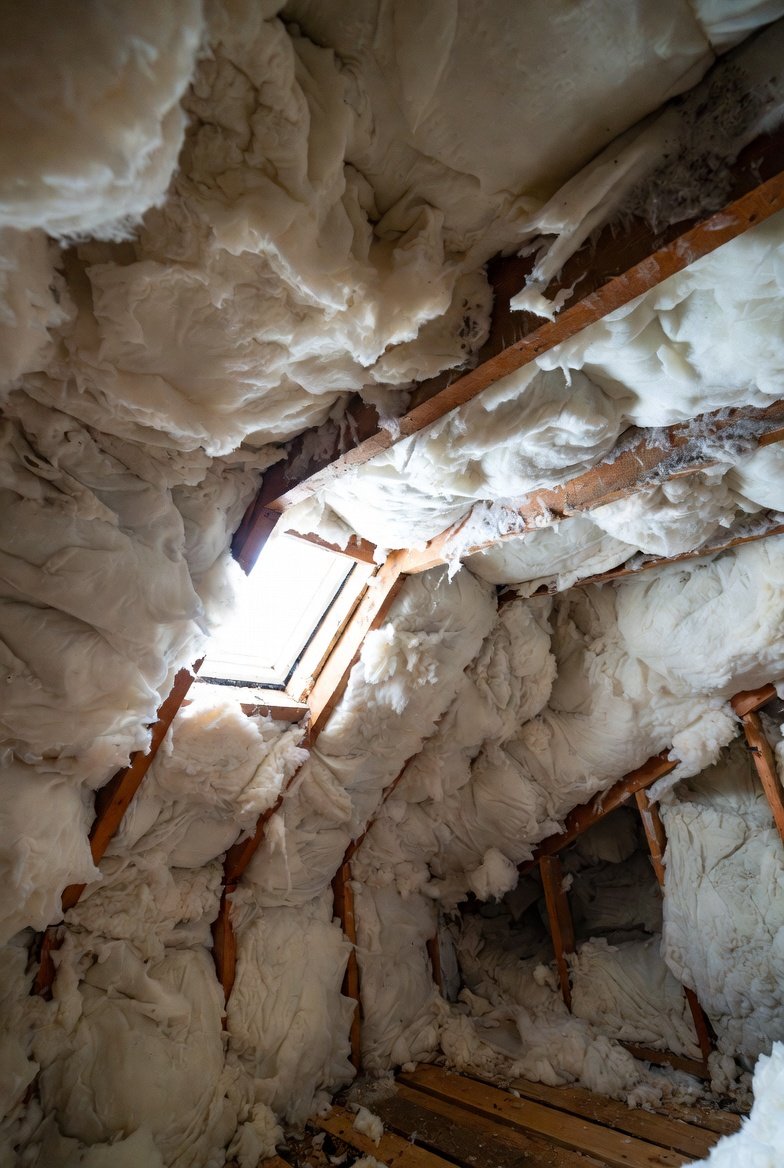
Rodent in Attic: What It Means and What to Do Next
If you think there’s a rodent in your attic, you’re usually reacting to one of three things:
Scratching or scurrying above the ceiling (often at night).
Droppings near the attic hatch, along insulation edges, or on beams.
A smell that’s hard to describe—musky or urine-like, and it keeps returning.
Here’s the tricky part: “rodent” is a category, not an answer. The most common attic culprits are rats, mice, and squirrels—and each one pushes you toward a slightly different plan.
This page is built to do two jobs quickly:
Help you confirm it’s a rodent and narrow down which one is most likely.
Route you to the right decision page (money pages) so you don’t waste days doing the wrong fix.
What to Do First (The 24-Hour Plan)
1) Don’t seal holes yet
Sealing entry points before you’re sure the animal is out can trap it inside and create new damage or odor problems. The safe exclusion rule is: confirm they’re gone first—then seal.
2) Don’t use poison in an attic
Poison can create the worst outcome: rodents dying in walls or insulation where you can’t reach them. Then you’re dealing with odor, flies, and contamination on top of the original problem. For attics, the clean path is typically trapping/monitoring + exclusion.
3) Do a low-risk signs sweep
If you can safely check the attic hatch area (no deep crawling):
Look for droppings along edges and beams
Look for insulation tunneling or nest pockets
Note if the sound is loudest near eaves/vents (common entry zones)
If it doesn’t feel safe, skip the attic and move straight to the routing section below (and consider a pro inspection).
How to Confirm It’s a Rodent (Not Just “House Sounds”)
Rodent activity tends to leave repeatable evidence. The strongest signs are:
Repeated scratching or scurrying (not one random thump)
Droppings along travel paths
Gnaw marks on wood, plastic, stored items—or wiring
Rub/grease marks near openings and along edges
Nesting material (shredded insulation/paper)
Rodents also prefer edges and hidden routes, so signs often appear on the attic perimeter rather than the center. A common inspection checklist includes looking for rub marks, droppings, tracks, and gnawing.
Fast ID: Rats vs Mice vs Squirrels (The Simple Triage)
Use noise timing + evidence + entry size.
Table: Quick ID — which rodent is most likely?
Clue Rats Mice Squirrels
Noise timing Mostly night Mostly night Mostly day
Sound Heavier scurry, occasional thumps Lighter tapping runs Daytime scamper, rolling sounds
Access route Small gaps near roofline/vents Even smaller gaps Roofline + branches
If activity is clearly daytime, squirrels move up the list. If it’s mostly nighttime with odor or heavier movement, rats move up.
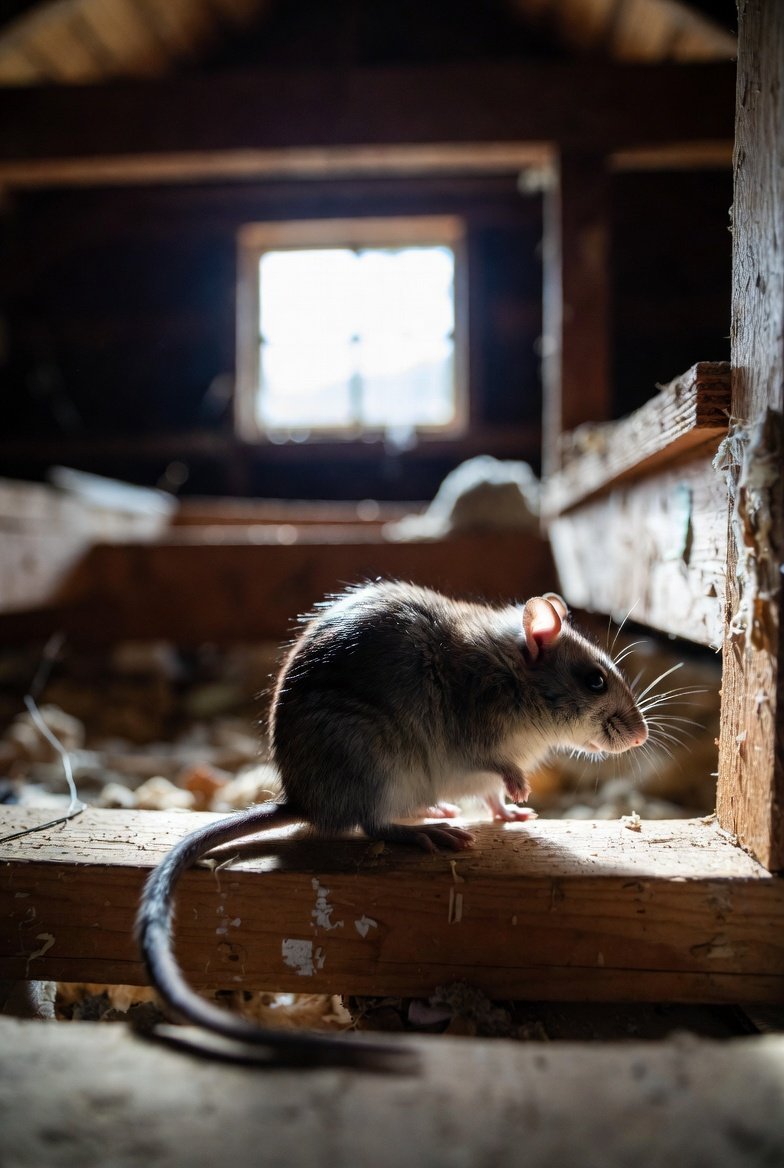
How Rodents Get Into Attics (Why “I Sealed the Big Hole” Often Fails)
Attics are reached through the same predictable weak points:
- Roofline/fascia corners
- Damaged soffits
- Loose or weak vent screening
- Utility penetrations (pipes/wires near roofline)
- Gaps where materials meet (siding/roof interfaces)
The key reality: rodents can fit through surprisingly small openings. Get Rodent Control Help
Guidance notes rats can enter through holes larger than about 1/2 inch and mice through holes larger than about 1/4 inch.
That’s why exclusion needs to be thorough, not “best effort.”
DIY vs Pro: The Decision Boundary That Saves Time (and Money)
Most homeowners can do parts of this. Most failures happen when the plan is missing one piece:
Removal without exclusion = repeat intrusion.
DIY may be reasonable if
Signs seem light and recent
You can access the attic safely
You can commit to daily checks for about a week
You’re prepared to seal entry points after activity stops
Call a pro if
Activity is frequent/nightly or you smell strong odor
You suspect multiple entry points
You see chewing near wiring
Droppings are widespread (contamination risk)
DIY didn’t clearly improve within 7–10 days
What matters DIY Professional
Professional Rodent Control Options
Correct ID Sometimes guessing Evidence-based confirmation
Removal plan Basic traps Structured trapping + monitoring
Entry-point finding Often incomplete Full exterior + attic inspection
Exclusion quality Mixed Typically the main value
Cleanup guidance Minimal Usually included/advised
Long-term success Depends on sealing Higher with thorough exclusion
If you want one “truth test” question for any plan:
“How are we preventing re-entry?” If the answer is vague, the plan isn’t complete.
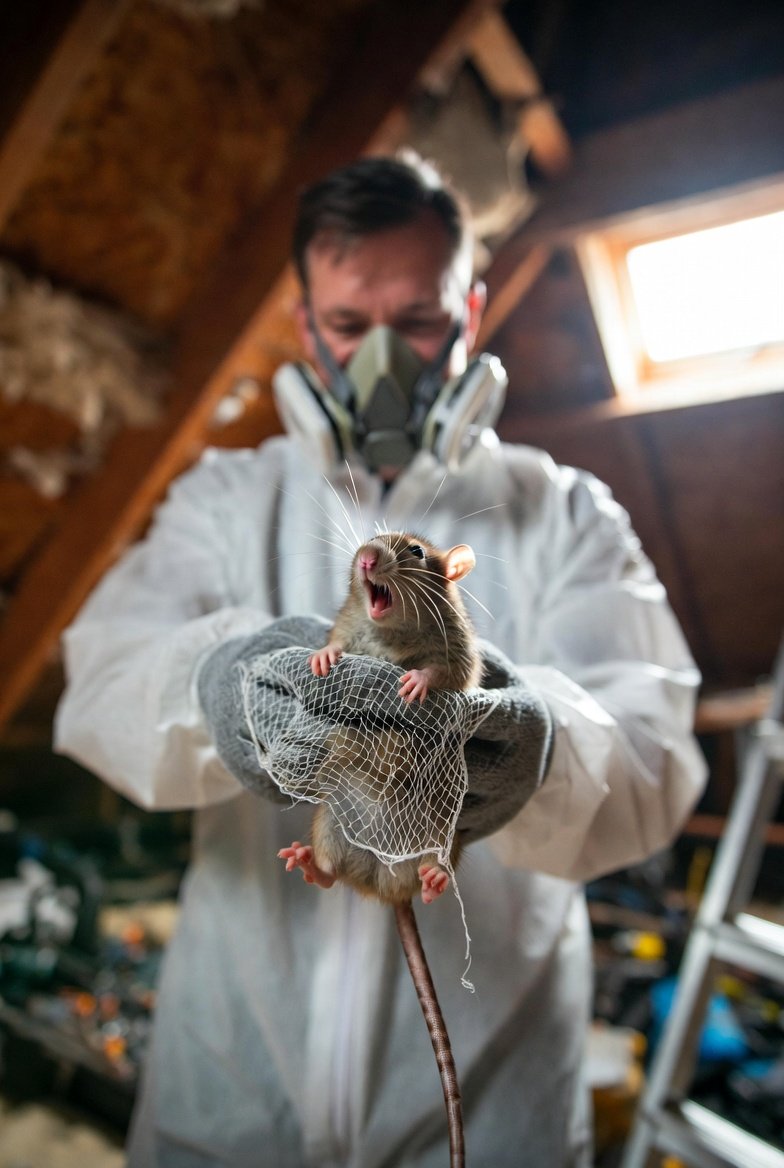
The Clean, Practical Fix (In the Right Order)
Step 1: Confirm which rodent it likely is
Use timing + the table above. You don’t need perfection—just strong probability.
Step 2: Start removal the safe way
For most homeowners, that means trapping/monitoring, not poison. (This page routes you to the more specific decision pages below.)
Step 3: Identify entry points
The best exclusions focus on:
Vents (roof/soffit/gable)
Roofline corners
Penetrations and gaps near utility lines
Hardware cloth / wire mesh is commonly used as a rodent barrier in building guidance.
Step 4: Seal AFTER activity stops
Once you’re confident the attic is quiet, seal all viable openings—remembering those gap-size thresholds for rats/mice. Rat Droppings in Attic
Step 5: Clean up safely
Especially important if droppings/urine are present.
Safe Cleanup (If You Find Droppings or Urine)
Don’t dry sweep and don’t vacuum first.
CDC guidance recommends:
Put on gloves
Spray droppings/urine with bleach solution or an EPA-registered disinfectant until very wet
Let it soak for 5 minutes (or per label)
Wipe up with paper towels and dispose properly
If insulation is heavily contaminated, cleanup can move beyond DIY. In that case, route to a droppings/contamination page or a pro cleanup quote.
The “Point of No Return” (When Waiting Starts Getting Expensive)
A rodent issue becomes harder to solve when it crosses into:
Routine travel paths + nesting
Widespread droppings/urine
Insulation tunneling
Chewing near wiring or ducting
Once nesting is established, you’re not just removing an intruder—you’re undoing a setup. That’s why acting early is usually cheaper and easier.
What a Good Pro Will Do (So You Can Judge Competence)
A competent service typically:
Confirms species (or best evidence-based match)
Runs a trapping/monitoring plan until activity stops
Locates and documents entry points
Performs or quotes exclusion work (the real long-term fix)
Advises on safe cleanup and prevention
If a provider only talks about “treatment” but doesn’t talk about how rodents are getting in, you’re likely paying for a temporary dip, not a permanent fix.
Routing: Go to the Right Next Page
Use this section like a map.
Nighttime activity + stronger odor / heavier scurry → Rats in Attic
Nighttime activity + tiny gaps suspected / lighter sounds → Mice Removal (publish if you have it)
Daytime scampering near roof edges / branches → Squirrels in Attic (publish if you have it)
You’re not sure it’s a rodent → Animal in Attic (broader routing hub)
You want service help now → Rodent Control Services (money/service page)
Limitations (Fair Reality Check)
You may not be able to identify the exact rodent from sound alone. That’s normal. Use timing + evidence to narrow it down.
Some homes have multiple entry points. Even perfect trapping won’t help if exclusion is incomplete.
If you suspect bats or protected wildlife, the approach can change based on rules/seasonality—route to the appropriate wildlife page or pro help.
Quick Verdict
A “rodent in attic” problem is solved by confirming which rodent is most likely, then executing the correct sequence: remove/monitor → confirm clear → seal entry points → clean safely → prevent return. Removal without exclusion almost always leads to repeat problems—use the routing links below and fix it once.