
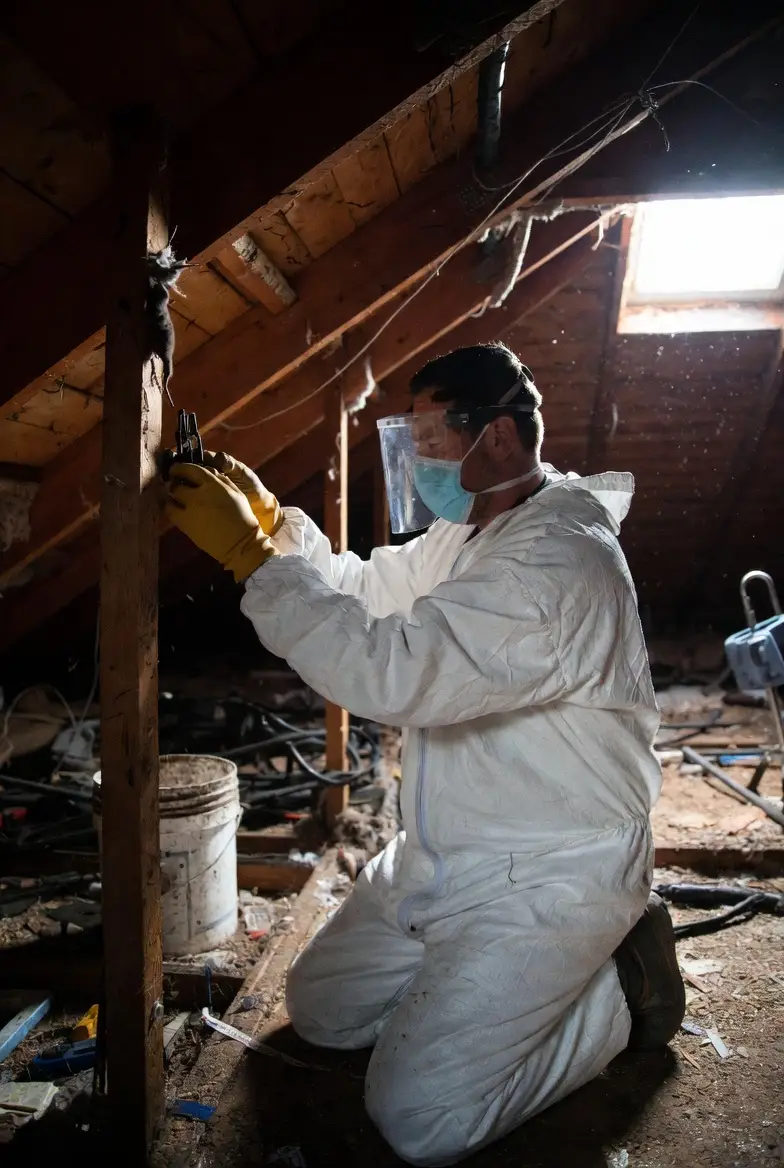
Rodent Removal in the Attic: How to Stop the Problem Without Guessing
If you want the problem to stay gone, focus on exclusion + cleanup + short monitoring—trapping alone rarely ends attic rodent problems.
Why attic rodent problems keep coming back
Rodent in Attic: Signs, Which Rodent It Likely Is, and the Fix That Stops Repeat Intrusions
An attic is the perfect “quiet apartment” for rodents: soft insulation, low traffic, steady warmth, and usually a nearby food path (trash, pet food, bird seed, garage storage).
The common failure pattern looks like this:
- Someone sets traps (or uses bait)
- Activity reduces for a few days
- Nothing gets sealed
- New rodents re-enter through the same opening
Integrated Pest Management (IPM) is the opposite approach: identify and monitor activity, reduce attractants, physically exclude entry, and use targeted control only where needed.
First: confirm it’s rodents (and not squirrels or bats)
Attics have normal noises—duct expansion, wind, roofing shifts. Before you commit to a full removal plan, confirm two or more of these signs:
Rodent confirmation checklist
Droppings:
small dark pellets along edges, beams, or near stored items
Gnawing:
chewed cardboard, plastic bins, wiring sheathing
Rub marks:
dark grease streaks along repeated travel routes
Shredded
insulation/paper: nest material in corners or low spots
Night activity:
scurrying/scratching most noticeable after dark
Rodents vs squirrels vs bats (fast rule-out table)
Clue Rodents (mice/rats) Squirrels Bats
Noise timing Mostly night Often daylight Dusk/dawn fluttering
Droppings Pellets;
scattered on travel paths Larger droppings; may be fewer Small droppings that crumble; may gather below roost
Entry style Small gaps,
vents, penetrations Larger roofline gaps, fascia damage Tiny gaps near roofline; often near roost spots
Damage pattern Gnawing on boxes/wires Chewed wood, torn soffit Staining/odor near roost area
If you’re unsure which animal it is, don’t overreact—just move into the inspection step below and treat it as an “attic intruder” until evidence narrows it down.
What to do today (before buying anything)
1) Reduce the “pull”
Remove or seal any stored food (bird seed, pet food, snacks, etc.)
Put attic storage into sealed bins (or reduce clutter in one corner at a time)
2) Do a fast exterior scan
Most attic rodent access starts at:
- Soffit/fascia gaps
- Gable vents / roof vents (unprotected)
- Pipe and cable penetrations
- Roofline transitions where materials meet
3) Decide DIY vs pro based on risk, not pride
This isn’t about courage. It’s about safety, access, contamination, and the likelihood you can actually seal the structure correctly.
DIY vs Pro: decision boundary
Situation DIY may be reasonable A pro is usually smarter
Evidence level Light activity; small droppings area Heavy droppings / strong odor / multiple nest zones
Access Safe attic access; stable walking surface Tight/unsafe access; steep roofline entry points
Wiring risk No signs of wire damage Any suspected chewed wiring (fire risk)
History First occurrence Repeated returns after trapping
Cleanup scope Small spot cleanup Urine-soaked insulation, wide contamination
Rodent Droppings in Attic Safe Cleanup Basics
If you have heavy contamination, the “cleanup + remediation” part can become the main job—not the trapping.
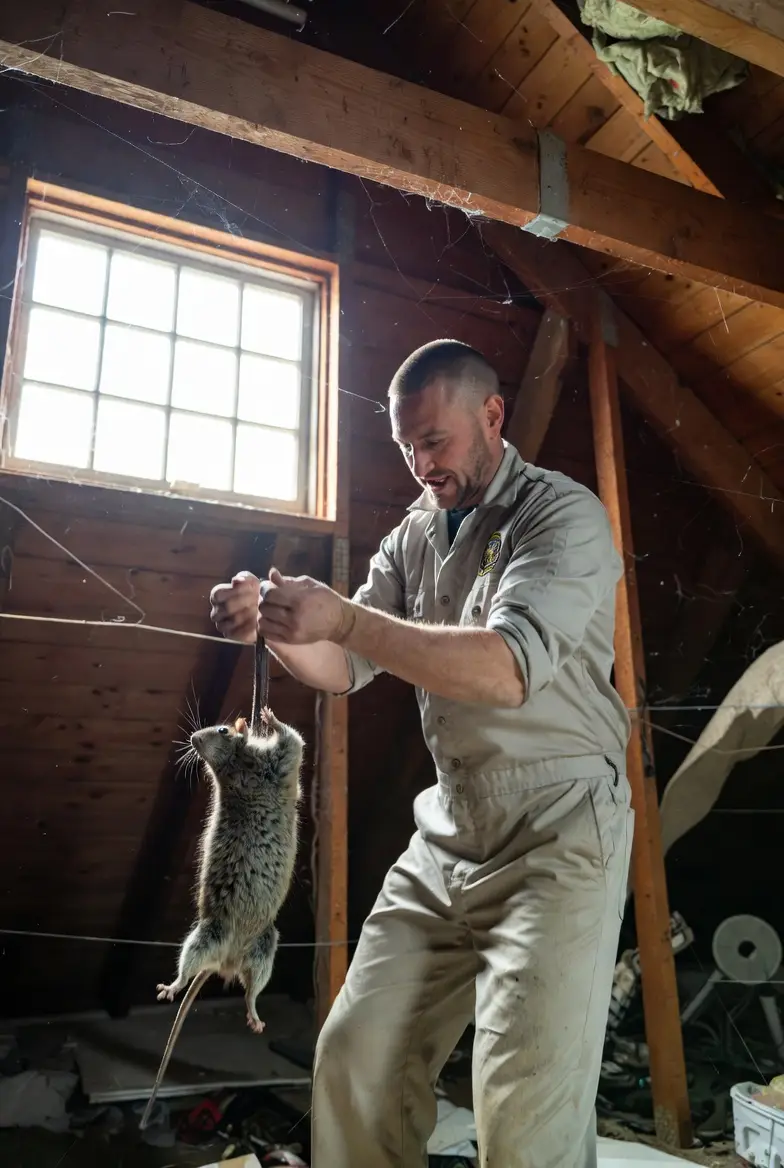
The step-by-step attic rodent removal plan (in the right order)
Step 1: Inspect inside and outside
Inside:
Follow edges and beams (rodents hug structure lines)
Mark droppings clusters and likely nest zones
Look for daylight leaks and disturbed insulation near vents/penetrations
Outside:
Walk the perimeter, look up slowly, and mark gaps
Pay extra attention to roofline corners and vent screens
A well-known mechanical rodent-proofing method for attics/crawl spaces is to inspect in daylight, shut off interior lights, and look for light entry at suspected openings.
Step 2: Remove current rodents (targeted control)
For most homeowner situations, removal usually means trapping (DIY or pro). If you’re doing DIY:
- Place traps along travel lines (edges/rafters where safe)
- Avoid random “center of attic” placement
- Check regularly and remove promptly
If you choose Rodent Pest Control Services, ask them how they’ll document activity and confirm success (monitoring plan). IPM in buildings emphasizes monitoring and records—not guessing.
Step 3: Don’t seal too early (timing matters)
A common mistake is sealing everything while rodents are still inside. That can lead to:
- Odor from hidden carcasses
- Rodents trying to chew new exit paths
- Activity shifting into wall voids
A practical approach is: start control → confirm activity is dropping → then complete exclusion → then monitor.
Step 4: Exclusion (this is the real “finish line”)
Exclusion means physically blocking entry routes using rodent-resistant materials while keeping vents functional.
Common attic entry points:
- Soffit/fascia gaps and roofline returns
- Unprotected gable vents / roof vents
- Pipe/cable penetrations (especially where gaps were “lazy-sealed”)
- Gaps near garage-to-attic transitions
In IPM, this is the “underlying cause” fix: reduce entry and harborage so rodents can’t re-establish.
Step 5: Cleanup and sanitation (CDC-aligned)
If you find droppings or nesting material, do not dry sweep or vacuum before disinfecting—this can put contaminated particles into the air.
Safer attic cleanup sequence:
Wear gloves (and use sensible respiratory protection for dusty attic environments).
Spray droppings/nests with disinfectant until fully soaked and let it sit—CDC guidance uses a soak time (often around 5 minutes or per label).
- Pick up with paper towels and dispose in garbage.
- Disinfect surrounding surfaces again after removal.
- Clean and disinfect gloves/hands afterward.
If insulation is heavily urine-soaked: consider Professional Rodent Removal for Attics remediation or insulation replacement. Smell can persist even after “successful removal” if contaminated material stays.
Step 6: Monitoring (so you don’t rely on hope)
A short monitoring phase is what turns “seems gone” into “confirmed.”
Re-check weekly for 2–4 weeks for new droppings and disturbed insulation
Re-check exterior seals after storms or roof work
Building IPM guidance emphasizes monitoring pest-vulnerable areas and adjusting plans based on findings.
Cost: what actually changes the price of attic rodent removal
Costs swing by severity and structure complexity more than anything else. Instead of chasing a perfect number, compare bids using the same scope checklist.
Attic rodent removal cost drivers
Cost driver Why it matters What to ask
Severity (light vs heavy) More visits and more time “How many visits are included?”
Exclusion complexity Roofline and vents take skill/time “Exactly what openings will you seal?”
Contamination/remediation Cleanup can become the main job “Is insulation removal included or separate?”
Monitoring plan Prevents “it came back” “How do you confirm success?”
Quote checklist (copy/paste when calling)
Ask each provider:
Where are the likely entry points (with photos)?
What exclusion materials will be used and where?
Are follow-up visits included?
What cleanup is included (if any)?
How do you confirm activity is gone?
This is the difference between a real solution and a short-term patch.
What a good professional service typically includes
A strong attic rodent service usually has:
Full inspection (inside + outside), documented entry points
Targeted removal plan (traps/monitoring)
Exclusion work (sealing and protecting key access points)
Clear cleanup guidance (or remediation option)
Follow-up monitoring
That structure matches how building IPM programs describe success: monitoring + prevention + targeted controls, not blanket treatments.
Limitations / Drawbacks (realistic expectations)
You may miss an entry point on the first pass. Roofline transitions are tricky, and small gaps matter.
Quiet doesn’t always mean “done.” That’s why monitoring exists.
Cleanup may out-scope removal. If insulation is saturated or odor is strong, remediation can be necessary even after rodents are gone.
Seasonal pressure is real. Cold snaps and storms can increase attempts to re-enter.
When to stop DIY and escalate
Call a pro if:
You suspect chewed wiring or see damaged cable sheathing
Droppings are heavy or widespread
You can’t safely access attic/roofline areas for exclusion
You’ve trapped rodents before and the problem returns (classic exclusion failure)
Bottom line
Rodent removal from an attic is a short, practical chain: confirm → control → exclude → clean → monitor. If you keep that order, you stop chasing symptoms and start ending the cycle.