
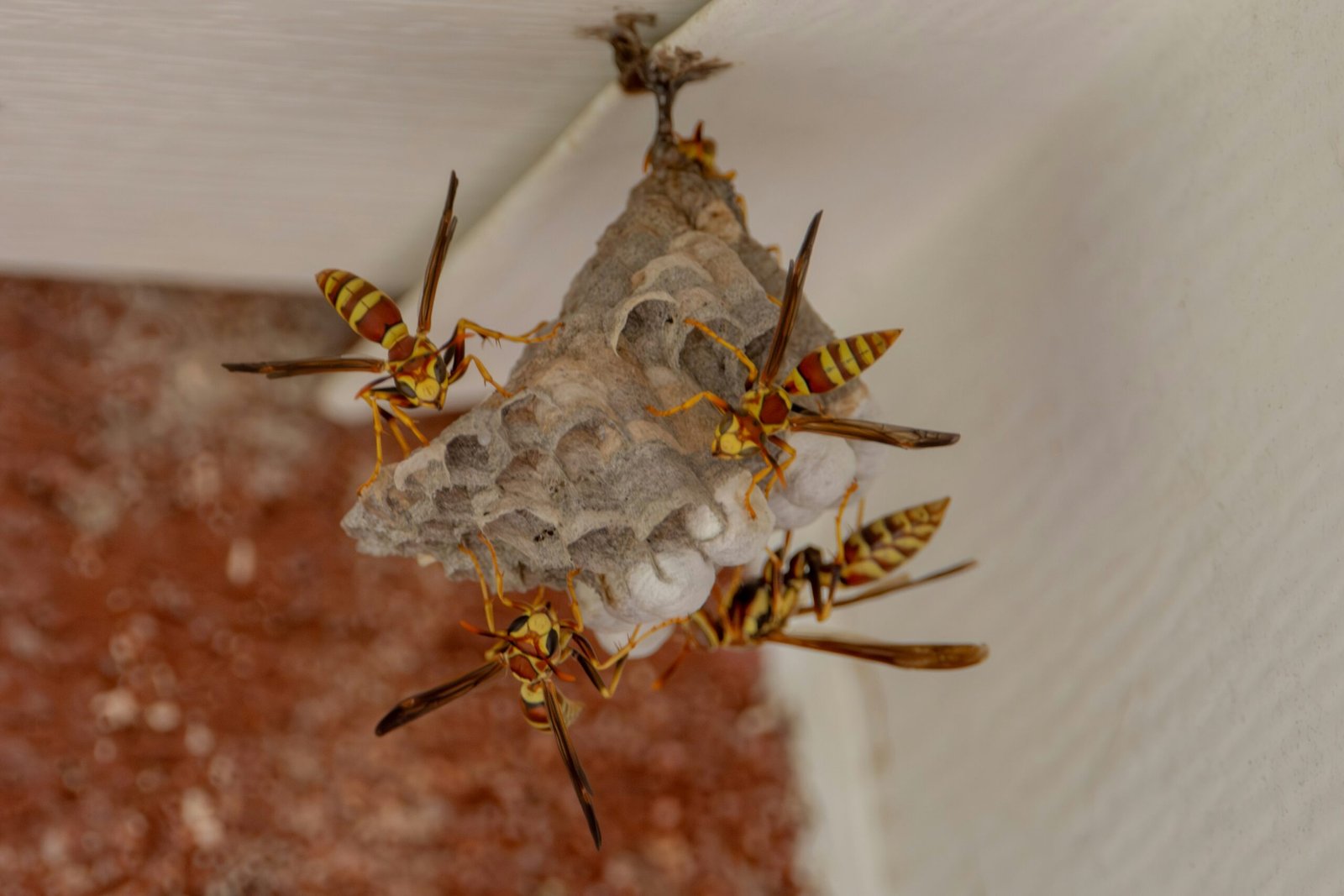
Yellow Jacket Pest Control: When a Nest Turns Into a Real Safety Risk
Most people discover a yellow jacket nest the same way.
A lawn mower crosses the yard. A step lands on what looks like ordinary grass. Seconds later, insects begin rising rapidly from the ground.
What felt like a safe outdoor space suddenly isn’t.
Yellow jackets are not simply another backyard insect. When a colony establishes itself near everyday activity, risk can escalate quickly. Understanding when their presence is routine — and when it signals a legitimate safety concern — is the difference between staying ahead of the problem and reacting to it.
This guide explains:
- When yellow jackets become a real safety issue
• How nests escalate over the season
• What professional pest control actually involves
• Realistic cost expectations
• How to prevent colonies from returning
If you’re unsure whether activity qualifies as a broader issue, reviewing common signs of pest infestation can help clarify the next step.
Are Yellow Jackets Actually Dangerous?
Seeing a single yellow jacket passing through your yard is often normal.
The concern rises when a colony settles nearby.
Yellow jackets defend their nests aggressively and can sting repeatedly. Unlike honeybees, they do not lose their stinger, which means multiple stings can occur if the colony perceives a threat.
Risk Increases When Nests Are Close To:
- entryways
• sidewalks
• decks and patios
• children’s play areas
• pet zones
• frequently maintained landscaping
The real danger is rarely the lone insect.
It is unknowingly entering the colony’s defensive perimeter.
If someone experiences difficulty breathing, dizziness, or significant swelling after a sting, medical care should be sought immediately. While most stings are localized reactions, allergic responses require urgent attention.
Why Yellow Jacket Problems Escalate Faster Than Expected
Early in the season, colonies are small and rarely noticed. A single queen begins constructing the nest and raising workers.
As temperatures rise:
- worker populations expand
• food demand increases
• foraging intensifies
• defensive behavior strengthens
By late summer, colonies can reach thousands of individuals. At this stage, even minor disturbances may trigger coordinated defense.
A yard that felt predictable weeks ago can suddenly feel uncertain.
The Hidden Threat Many Homeowners Miss — Ground Nests
Yellow jackets commonly build nests underground, often inside abandoned rodent burrows or natural soil cavities.
These nests are easy to overlook until disturbed.
Warning Signs of a Ground Nest
- steady insect movement entering/exiting a small hole
• increased daytime activity concentrated in one location
• sudden swarming during mowing
• buzzing close to soil level
Ground nests deserve caution because they are often discovered at close range.
Yellow Jackets vs Paper Wasps — Know the Difference
Misidentification is common and can lead to underestimating risk.
Feature | Yellow Jackets | Paper Wasps |
Body shape | Compact and sturdy | Slender with longer legs |
Nest style | Underground or enclosed cavities | Open umbrella-shaped nests |
Colony size | Large (hundreds to thousands) | Smaller |
Temperament | Highly defensive | Generally less aggressive |
Attack behavior | Coordinated swarm response | Defensive only if provoked |
Risk level | Higher | Lower |
Correct identification guides the appropriate response.
For additional identification guidance across stinging insects, see our stinging insect identification guide.
Stinging insect identification guide
Yellow Jacket Risk by Nest Location
Nest Location | Risk Level | Why It Matters |
Open lawn | High | Easily disturbed during normal activity |
Near doorways | Very High | Frequent human movement |
Inside walls | Severe | Access difficulty increases complexity |
Landscaping edges | Moderate–High | Hidden traffic zones |
Tree branches | Moderate | Typically visible and avoidable |
Proximity to daily movement is the strongest predictor of danger.
When Monitoring Is Enough — And When It Isn’t
Decision Threshold
Situation | Monitor | Call Pest Control |
Occasional sightings | ✔ | |
Nest far from activity | ✔ | |
Activity increasing weekly | ✔ | |
Ground nest in yard | ✔ | |
Stings have occurred | ✔ | |
Nest near children or pets | ✔ | |
Structural nesting | ✔ |
Distance lowers risk. Proximity raises it.
If you’re unsure about escalation thresholds, our guide on when to call pest control outlines similar decision boundaries.

Common Mistakes That Make Yellow Jacket Situations Worse
Avoid these actions near an active nest:
- spraying during peak daylight
• sealing the entrance prematurely
• mowing directly over suspected holes
• striking the nest
• pouring water into openings
Disturbance without control often triggers defensive swarming.
What Professional Yellow Jacket Pest Control Actually Involves
Professional service focuses on predictability and safety.
Inspection
A technician evaluates nest location, access points, structural risk, and surrounding activity zones.
Targeted Treatment
Applications are typically timed during lower activity periods when more workers are present inside the nest.
Colony Elimination
Specialized formulations neutralize the colony rather than scattering it.
Nest Stabilization
Once inactive, nests pose minimal risk.
Verification
Reputable providers confirm declining activity before closing the service.
If nesting overlaps with broader property concerns, integrated service may align with comprehensive pest control services planning.
How Much Does Yellow Jacket Pest Control Cost?
Costs reflect complexity.
Typical National Ranges
- Standard nest removal: $200 – $700
• Underground or difficult-access nests: $500 – $1,300
• Wall void / structural nests: Higher due to precision labor
• Follow-up or seasonal service: Varies by plan structure
Primary Cost Drivers
Factor | Why It Matters |
Nest type | Underground and structural nests require precision |
Accessibility | Hard-to-reach locations increase labor |
Colony size | Larger populations demand stronger intervention |
Urgency | Rapid-response service may cost more |
For a broader breakdown of pest pricing structures, see our pest control cost guide.
Early treatment is often less expensive than addressing a mature late-season colony.
What Happens After Treatment?
Control is a trend — not always an instant disappearance.
Typical Post-Treatment Timeline
Timeframe | Expected Change |
First 24 hours | Significant activity decline |
2–3 days | Occasional returning foragers possible |
One week | Colony collapse evident |
Several weeks | Nest remains inactive |
Foragers already outside the nest may briefly return before dispersing. This does not automatically indicate treatment failure.
Trend direction matters more than isolated sightings.
Why Yellow Jackets Sometimes Appear to Return
Yellow jackets typically do not reuse old nests.
However, new queens may overwinter nearby and establish fresh colonies if environmental conditions remain favorable.
Prevention plays a critical role.
Prevention That Reduces Nesting Risk
- keep trash sealed
• clean outdoor eating areas
• limit exposed sweets and proteins
• monitor yard holes early in the season
• trim dense vegetation
• inspect structural gaps
Seasonal strategies detailed in our outdoor pest prevention guide help reduce future nesting likelihood.
When Immediate Professional Help Is the Smart Move
Act promptly if:
- a ground nest is near foot traffic
• stings have already occurred
• activity is intensifying
• the nest is inside a structure
• avoidance is no longer practical
Early intervention leads to simpler, safer resolution.
Choosing a Provider With Confidence
Look for professionals who:
- explain their inspection approach
• describe treatment clearly
• prioritize safety
• set realistic expectations
• provide prevention guidance
Clear communication reflects structured service.
The Bottom Line
Yellow jackets are not automatically dangerous — but mature colonies positioned near daily activity deserve respect.
Professional pest control focuses on eliminating the colony while ensuring environmental conditions no longer support new nesting.
Handled early, most situations resolve predictably.
Waiting rarely makes them safer.